The Benefits of Montessori Learning
Every preschool promises happy, confident, “well-rounded” children. However, what makes Montessori different, and are the benefits of Montessori learning backed by real evidence, or are they simply nice-sounding marketing claims? Fortunately, decades of research provide a clear answer.
Fortunately, the answer is clear. Montessori is one of the most carefully researched early education methods in the world, and the evidence supporting its effectiveness has only grown stronger over the years. In this article, we’ll explore the real benefits of Montessori learning, understand the research behind them, and see why so many parents continue to choose the Montessori approach for their children.
First, the Big Research Headline
In October 2025, the Proceedings of the National Academy of Sciences published the first national randomized controlled trial of public Montessori preschool, led by Professor Angeline Lillard of the University of Virginia. It tracked 588 children, comparing those who won a random lottery place at a Montessori school against those who applied but missed out.
Why does the lottery matter? Simply put, it removes one of the biggest criticisms often made about education studies—that Montessori families may already be different before their children even enter school. By assigning places randomly, researchers were able to measure the true impact of Montessori education rather than family background.
The result: by the end of kindergarten, Montessori children showed significantly better outcomes in reading, executive function, short-term memory, and social understanding — and the approach cost thousands less per child. Encouragingly, the benefits were strongest for lower-income children, suggesting Montessori can narrow gaps rather than widen them.
This echoed an earlier, famous 2006 study in *Science*, where Montessori children outperformed peers on reading and maths, played more cooperatively, and showed stronger social reasoning and self-control.
With that foundation, here are the benefits that matter most in everyday life.
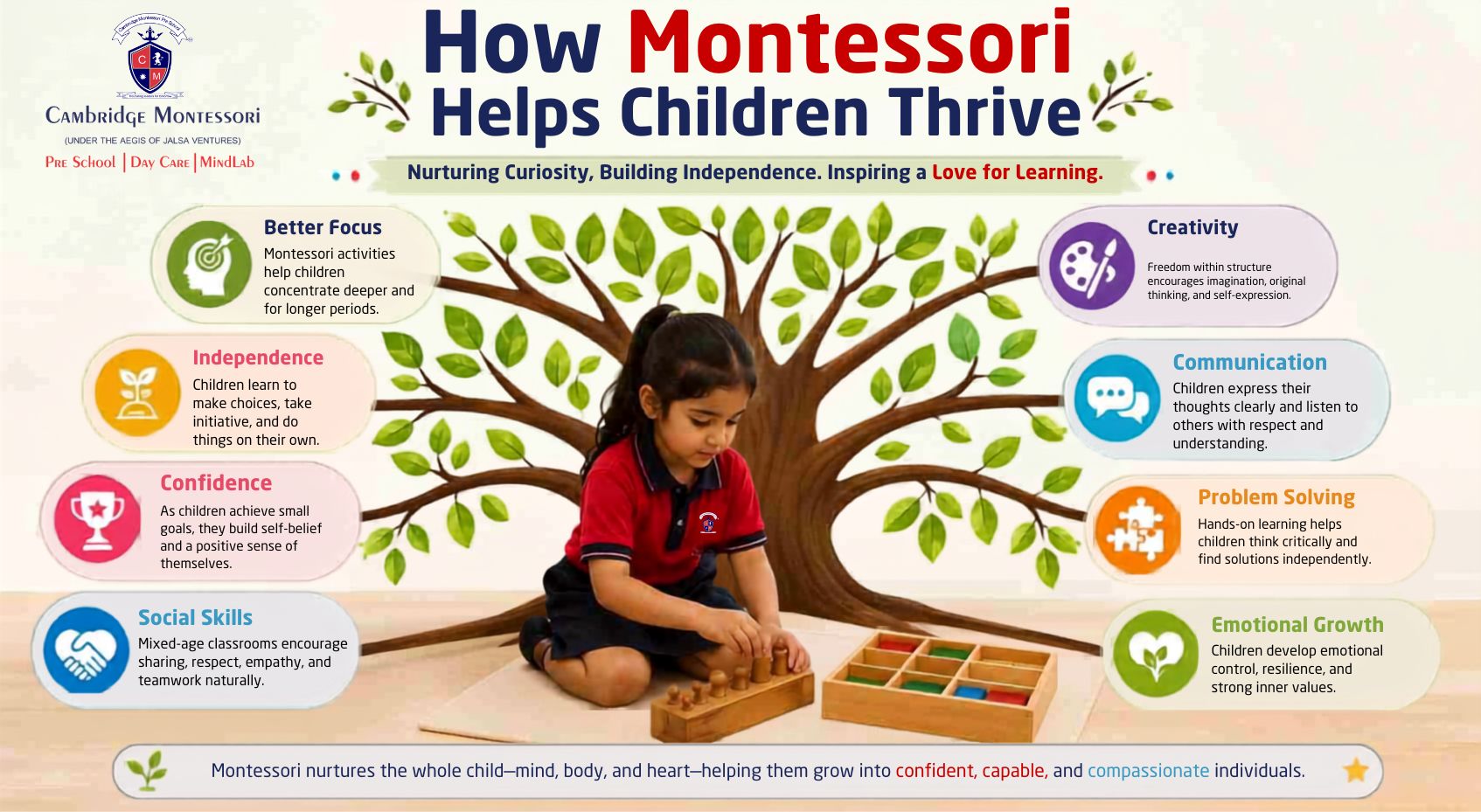
1. Stronger Focus and Concentration
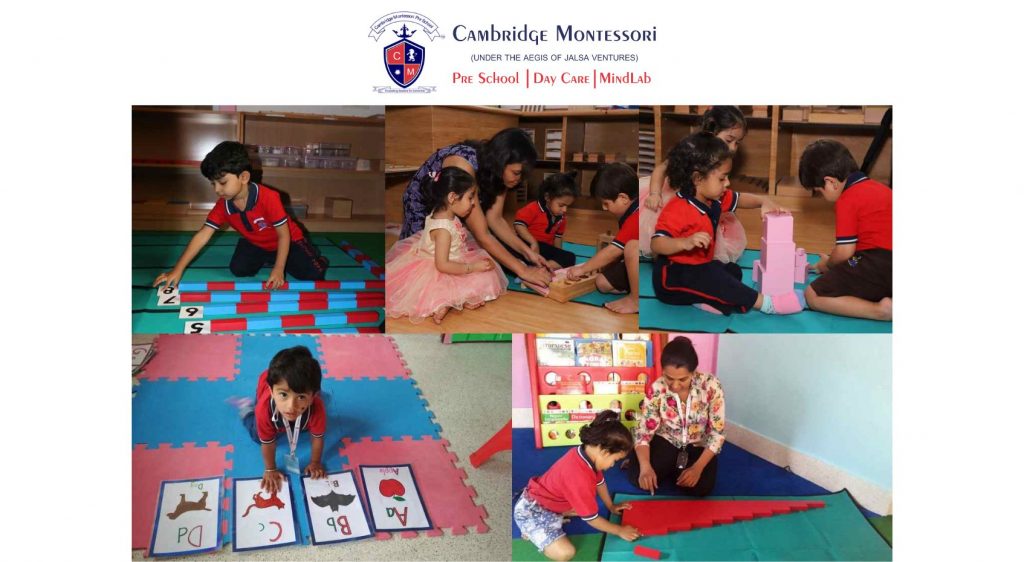
This is the benefit parents notice first. The long, uninterrupted work periods in a Montessori classroom — rather than a day chopped into 15-minute slots — train children to sink into deep concentration and stay there.
In today’s world of constant interruptions and shrinking attention spans, a child who can lose themselves in a task for half an hour has a genuine head start. In fact, this links closely to executive function — the brain’s ability to plan, focus, and self-regulate — which the 2025 study found Montessori notably strengthens.
2. Real Independence and Confidence
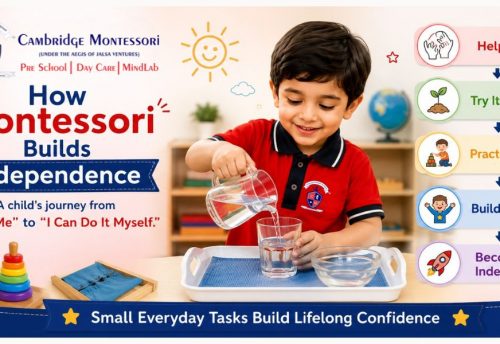
Montessori children learn to do things for themselves—pour their own drink, choose their own work, and clean up their own spills—from a very young age. As a result, the result isn’t just practical capability; it’s a quiet, durable confidence: “I can do this myself.”
This runs so deep that we devoted a whole article to it: How Montessori Builds Independence.
3. A Genuine Love of Learning
Because children choose their own work and progress at their own pace, learning never becomes a chore done only to please a teacher or earn a star. The motivation comes from inside. Montessori environments deliberately avoid heavy reliance on rewards and grades, which research suggests can actually undermine a child’s natural curiosity over time.
A child who wants to learn at five is far better placed than one who has already learned to associate learning with pressure.
Benefits of Montessori Learning: Better Communication and Social Skills
Montessori classrooms are surprisingly social places—and this is not by accident. The mixed-age setup means younger children learn from older ones, and older children practice patience and leadership by helping. In addition the daily “grace and courtesy” lessons—how to greet someone, wait your turn, and resolve a small conflict—and children build social fluency naturally. In fact the 2006 Science study specifically found Montessori children showed more advanced social understanding and played more cooperatively. (More on this in Why Mixed-Age Classrooms Work.)
5. Hands-On, Deep Understanding
Montessori’s materials are concrete before they’re abstract. A child understands what “ten” means by physically handling ten beads long before memorising the symbol. This hands-on foundation builds genuine comprehension rather than surface-level recall — and it tends to make later, more abstract learning click more easily.
6. Self-Regulation and Calm
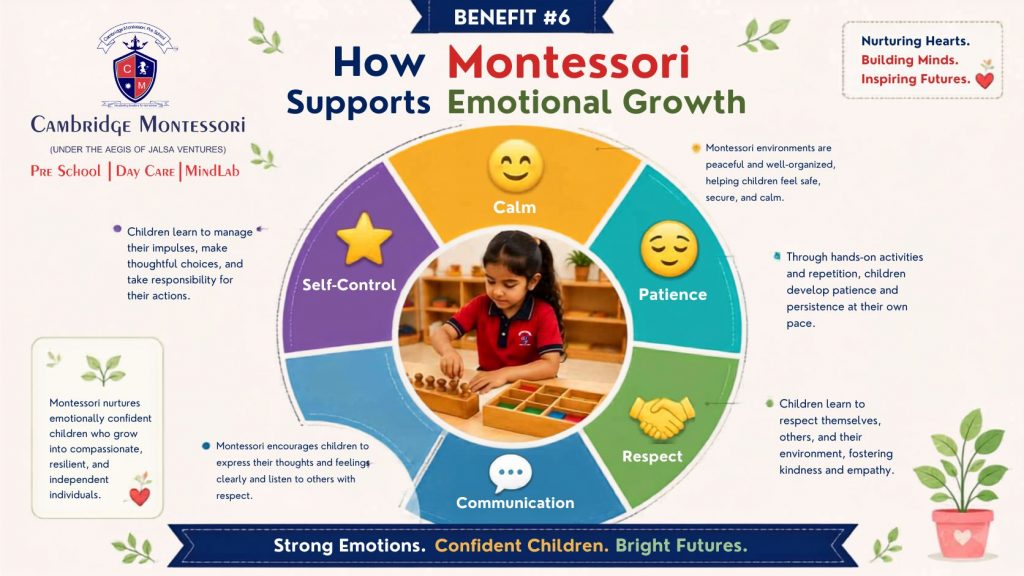
Perhaps the most underrated benefit. The order of the prepared environment, the freedom to move, and the modeling of calm, respectful behavior all help children manage their own emotions and impulses. Research links the Montessori environment with stronger self-regulation — the foundation for everything from sitting through a later school lesson to handling frustration without melting down.
Understanding the Real Benefits of Montessori Learning
No method is magic, and Montessori isn’t a guarantee. however, its benefits show up most reliably in authentic Montessori settings—trained guides, real materials, mixed ages, and protected work time. A school that simply borrows the name and a few wooden toys won’t deliver the same results. (Our guide on what genuinely makes a classroom Montessori helps you tell the difference.)
It’s also worth noting that, in the strongest studies, the differences sometimes took a couple of years to fully emerge. Montessori is a long game—it builds foundations, not quick party tricks.
(This article is part of our complete guide: Montessori Education: Everything Parents Need to Know.)
Why the Benefits of Montessori Learning Matter for Indian Parents
Today, These benefits align almost perfectly with the direction of Indian education. In fact, India’s National Education Policy 2020 places play-based, activity-based, and experiential learning at the heart of the Foundational Stage for ages 3 to 8—recognizing, just as Montessori always has, that the early years are when the foundations of focus, confidence, and curiosity are laid.
The Bottom Line
The benefits of Montessori learning aren’t wishful thinking—they’re stronger focus, real independence, intrinsic motivation, better social skills, deep understanding, and emotional self-regulation, increasingly backed by serious research.
If those are the qualities you want your child to carry into school and life, it’s worth seeing a genuine Montessori classroom in action. Book a visit to a Cambridge Montessori Global center near you and watch these benefits take shape in real time.
Frequently Asked Questions (FAQs)
1. What are the main advantages of Montessori learning?
Ans. Montessori learning helps children develop independence, confidence, concentration, problem-solving abilities, and social skills. It also encourages a love for learning by allowing children to explore concepts through hands-on activities at their own pace.
2. How is Montessori learning different from traditional preschool education?
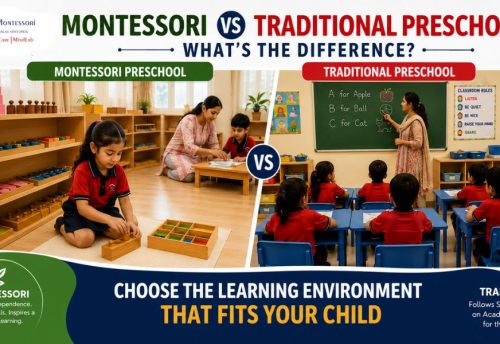
Ans. Unlike traditional preschools, Montessori classrooms encourage child-led learning, mixed-age interactions, and hands-on experiences. Children are guided to learn independently instead of following a fixed, teacher-led routine.
3. Does Montessori education improve a child’s concentration?
Ans. Yes. Montessori classrooms provide uninterrupted work periods that allow children to focus on one activity at a time. This helps improve attention span, concentration, and self-discipline from an early age.
4. How does Montessori help children become more independent?
Ans. Montessori encourages children to complete everyday tasks such as dressing, cleaning up, choosing activities, and solving simple problems on their own. These experiences gradually build confidence and independence.
5. is Montessori education effective to improve social skills?
Ans. Yes. Children interact with classmates of different ages, learn to cooperate, take turns, communicate respectfully, and resolve small conflicts. These daily interactions help develop strong social and emotional skills.
6. Why is hands-on learning important in Montessori education?
Ans. Hands-on learning allows children to understand concepts through real experiences rather than memorization. Using specially designed Montessori materials helps children develop a deeper understanding of language, mathematics, and practical life skills.
7. Is Montessori education suitable for every child?
Ans. Montessori can benefit many children because it supports different learning styles and encourages individual growth. However, parents should visit the school, observe the classroom environment, and choose a program that matches their child’s needs and personality.
8. Does Montessori education prepare children for primary school?
Ans. Yes. Montessori helps children build strong foundations in communication, problem-solving, independence, emotional regulation, and academic readiness, making the transition to primary school smoother.
9. What should parents look for in an authentic Montessori school?
Ans. Parents should look for trained Montessori educators, child-sized learning environments, authentic Montessori materials, mixed-age classrooms, uninterrupted work periods, and a curriculum that follows Montessori principles rather than simply using the name.
10. Why are more parents choosing Montessori education today?
Ans. Many parents choose Montessori because it focuses on developing lifelong skills such as confidence, creativity, independence, critical thinking, and a genuine love for learning. The child-centered approach also aligns well with modern early childhood education practices.