Life Skills for Preschoolers: Everyday Skills Every Child Should Learn
Preschool years are formative years in a child’s life. During these ages, children learn essential life skills for preschoolers that continue to guide them as they grow and become confident and independent. Many of these skills can be taught through simple everyday activities, helping children develop practical habits, responsibility, communication, and self-confidence.
What Are Life Skills for Preschoolers?
Life skills are abilities that guide children as they navigate everyday situations, communicate with others, make simple decisions, solve problems and take care of themselves. For very young children, these skills are best taught through play, routines and positive guidance.
-
Personal Hygiene
Personal hygiene is among the first things that children learn. Good personal hygiene habits such as washing hands before eating and after using the washroom, brushing teeth and covering their mouth while sneezing makes young children understand the value of cleanliness.
-
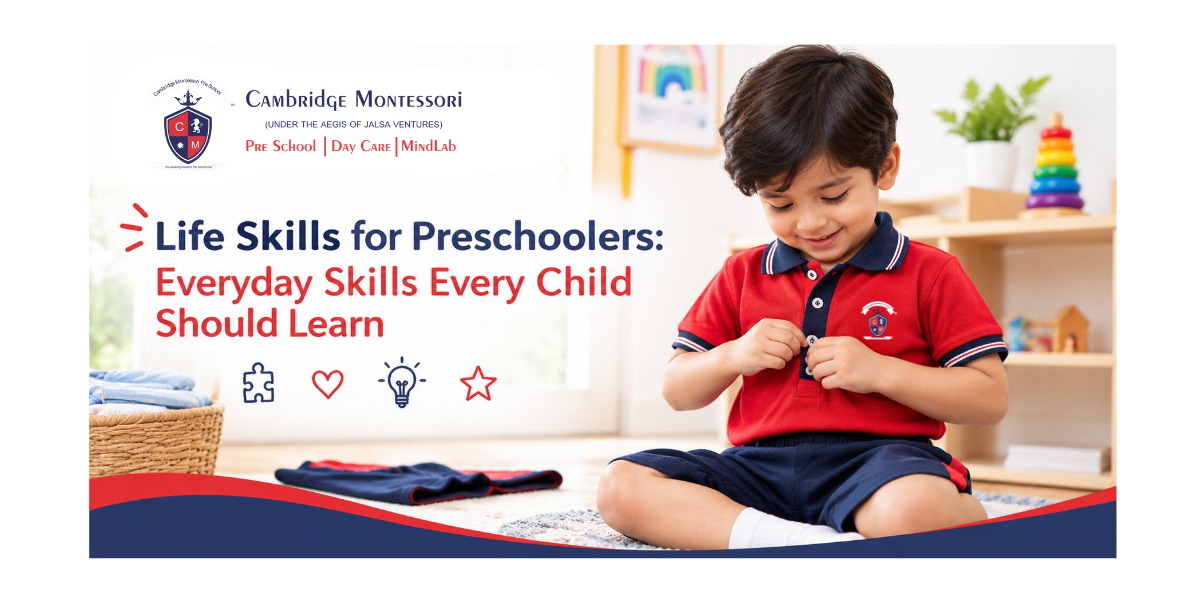
Dressing Independently
Independent dressing habits such as putting on and removing simple clothing, wearing shoes and socks, zipping or unzipping clothing and choosing between alternate clothing options give children confidence at managing their lives. Parents can assist when required, but letting children do these activities themselves benefits them greatly.
-
Eating Independently
Children can learn several skills during mealtime, such as learning to use a spoon and fork, drinking from a cup, sitting properly during meals, cleaning small spills and trying different healthy foods. Mealtimes teach children sharing, patience, table manners and food choices.
-
Cleaning Up After Themselves
Children can learn how to clean their environments, such as by putting away toys after playing, throwing waste into bins or helping wipe a small table.
-
Communication Skills
It is important to teach students to communicate their thoughts and feelings. Preschoolers must learn to practice basic sentences, and expressing their needs, saying sentences such as please and thank you and expressing disagreement politely. Activities such as storytelling and puppet shows build confidence and make communication enjoyable.
-
Emotional Awareness
Children experience many emotions but do not know how to process them. Adults can help children learn words such as sad, happy, angry, worried etc., and can help them identify and verbalize their emotions. This helps children develop emotional awareness and self-regulation.
-
Sharing and Taking Turns
Children can share their toys, and learn to patiently wait for their turn. This teaches them to cooperate and listen to other, as well as resolve disagreements. Games, group activities, puzzles, building blocks and pretend play provide opportunities to students to practice these skills.
-
Basic Problem-Solving
Children develop their skills in basic problem solving when parents influence them to solve problems instead of relying on adults.
-
Safety Awareness
Children should be made to learn basic safety rules appropriate for their age. Basic concepts such as knowing their names, knowing the names of parents or caregivers, learning basic safety rules, knowing when to ask for a trusted adult’s help and understanding that objects should be handled with care. Safety lessons should be repeated to make adults understand them.
How Parents Can Teach Life Skills at Home
Parents do not need complicated lesson plans to teach life skills at home. They can encourage these skills throughout the day by creating a supportive home environment and involving children in meaningful activities, such as letting them dress themselves and helping sort clothes after laundry. These simple experiences allow children to practise independence and responsibility as part of their everyday routine.
Conclusion
Life skills matter in early childhood because they make children more confident in handling everyday situations. They develop skills in communication, decision-making, and problem-solving through regular practice and interaction. A supportive preschool environment can give children opportunities to practise these skills through daily routines, activities, and group experiences. Most importantly, children learn through repetition, so adults should encourage them even when they make mistakes. Demonstrating these skills in everyday situations also helps children learn through observation and practice.
READ MORE :Creative Activities for Preschoolers That Support Learning and Development
Frequently Asked Questions.
Q1. What are the most important life skills for preschoolers?
Ans: Personal hygiene, communication, emotional awareness, self-care, eating independently, cleaning up, sharing, taking turns, basic safety, problem-solving, and following routines are the life skills that are necessary for preschool-age children.
Q2. At what age should children start learning life skills?
Ans. Children can be taught life skills from a young age, based upon their development stage and abilities.
Q3. How can parents teach life skills without putting pressure on children?
Ans. Children can learn without pressure when they connect learning life skills with everyday activities. Parents should demonstrate tasks and provide encouragement, and provide them with enough time to learn.
Q4. Should preschoolers be expected to do everything independently?
Ans. No. Preschoolers require adult guidance and supervision. They should be able to build independence gradually.
Q5. Can life skills be taught through play?
Ans. Absolutely. Pretend play, role play, building activities, storytelling, group games, and practical activities can make life-skill learning engaging and age-appropriate.