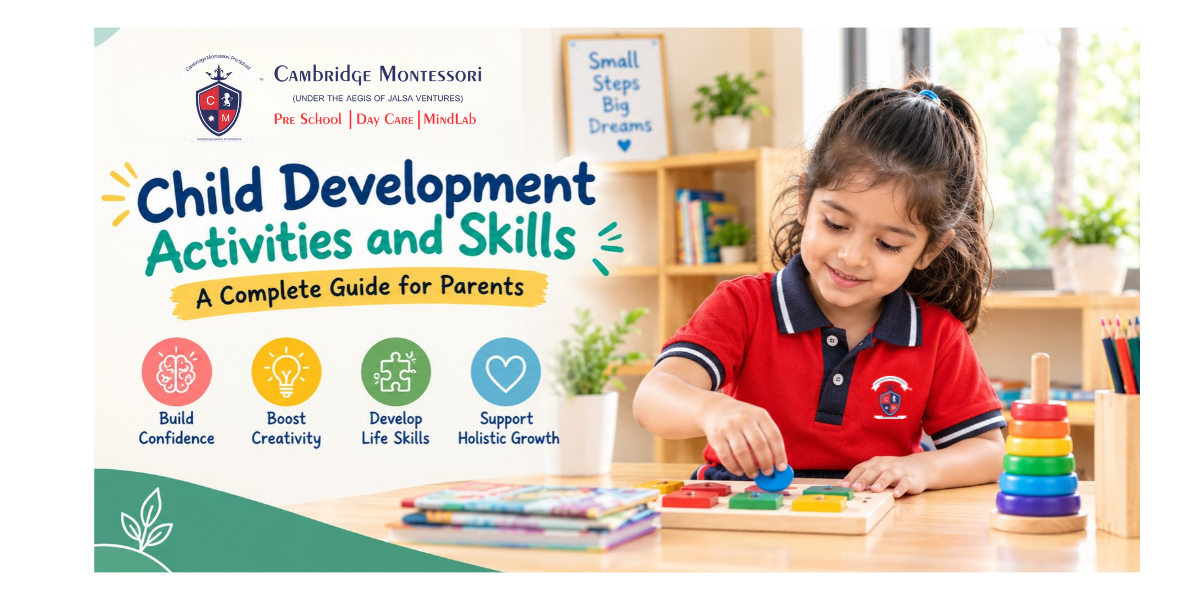
Child Development Activities and Skills A Complete Guide for Parents
Children have their own developmental pace. Childhood is an important period in their life when children learn how to take their first step, communicate and build essential life skills. The role of parents in this phase of life is to provide children with a nurturing and safe environment, and to engage them in meaningful activities through which children can further develop their skills and emerge as confident and independent students.
What Are Child Development Activities?
Child development activities are experiences that make students learn new skills and understand their environment. They can include activities such as puzzles, storytelling, drawing, outdoor games, pretend play and building blocks. For very young students, play is one of the most developmentally rich experiences that allow them to express themselves and develop various skills. Play is also essential for learning, as it allows children to experiment, express themselves and develop skills.
Essential Skills Children Need to Develop
1. Cognitive and Problem-Solving Skills
Cognitive skills involve thinking, remembering, reasoning and understanding. Many activities such as solving age-appropriate puzzles and matching games, sorting objects, playing with blocks and finding the solution to everyday problems encourage problem solving. These activities strengthen the child’s logical thinking, concentration, creativity and decision-making skills.
2. Language and Communication Skills
Development of communication skills allows children to verbalise and express their thoughts, understand instruction and communicate with others. It also influences future academic skills. These skills can be supported by reading picture books, letting children describe their drawings, singing rhymes and poems and introducing novel words during communicating with the child.
3. Social and Emotional Skills
Social and emotional skills are very important for the child to build relationships and understand other people. Activities that support these skills are playing cooperative games with siblings or friends, encouraging pretend play with roles, identifying emotions using pictures and stories, practicing sharing or taking turns, discussing kind behaviour and resolving disagreements. These activities help children nurture empathy, patience, self-confidence and good relationships.
4. Physical and Motor Skills
Preschool children are also developing their gross and motor skills such as running, jumping and fine motor skills such as using pencils. The activities that encourage these skills include outdoor play, dancing, ball games, playing with crayons, clay and craft materials, threading large beads, drawing, colouring and building with blocks. These activities develop the child’s coordination, balance, strength and independence.
5. Creativity and Imagination
Through creative activities, children develop their ideas, explore emotions and practice original thinking. It also allows them to experiment with worrying too much. Activities that develop these aspects include painting, drawing, crafting, recycling items into new structures, acting out stories, music, dance and pretend play. These activities encourage confidence and independent thinking.
6. Self-Help and Everyday Life Skills
Many everyday tasks can also build essential skills in children. These include encouraging children to put away their toys, choose their clothes, prepare meals under supervision, follow handwashing and personal hygiene routines, and organise their school bags and learning materials. At our centres we encourage children to develop independence and responsibility through age-appropriate activities that support their overall growth and learning.
How Can Parents Create a Development-Friendly Environment?
Conclusion
Child development activities and routines are the bedrock for learning, good relationships and independence. Each activity lets children develop meaningfully. With parents’ love and a supportive environment children feel encouraged and safe to learn and grow. It is important to not make every activity into a lesson but to turn childhood experiences into opportunities for discovery, confidence and development.
READ MORE :Child Health and Healthy Habits for Preschoolers A Complete Guide for Parents
Frequently Asked Questions (FAQ’s)
Q1. What are the best child development activities for young children?
Ans: Activities such as storytelling, puzzles, building blocks, outdoor play, pretend play and simple household tasks are useful developmental activities for very young children.
Q2. At what age should parents start child development activities?
Ans: Developmental activities can include talking, singing, responsive interaction and age-appropriate play form infancy onwards.
Q3. How much time should children spend on developmental activities?
Ans: Children should receive regular opportunities to play, move, converse and explore all throughout the day, with time to rest.
Q4. How can parents identify developmental delays?
Ans: Concerns related to communication, movement, learning, social interaction and other developmental milestones should be discussed with a paediatrician.
Q5. Do children need separate lessons for every skill?
Ans: No. Play often supports several skills.
Q6. How much should adults lead?
Ans: Adults should provide routine and safety, and leave the rest to the child.
Q7. Should activities be repeated?
Ans: Yes, as repetition allows for mastery of an activity.