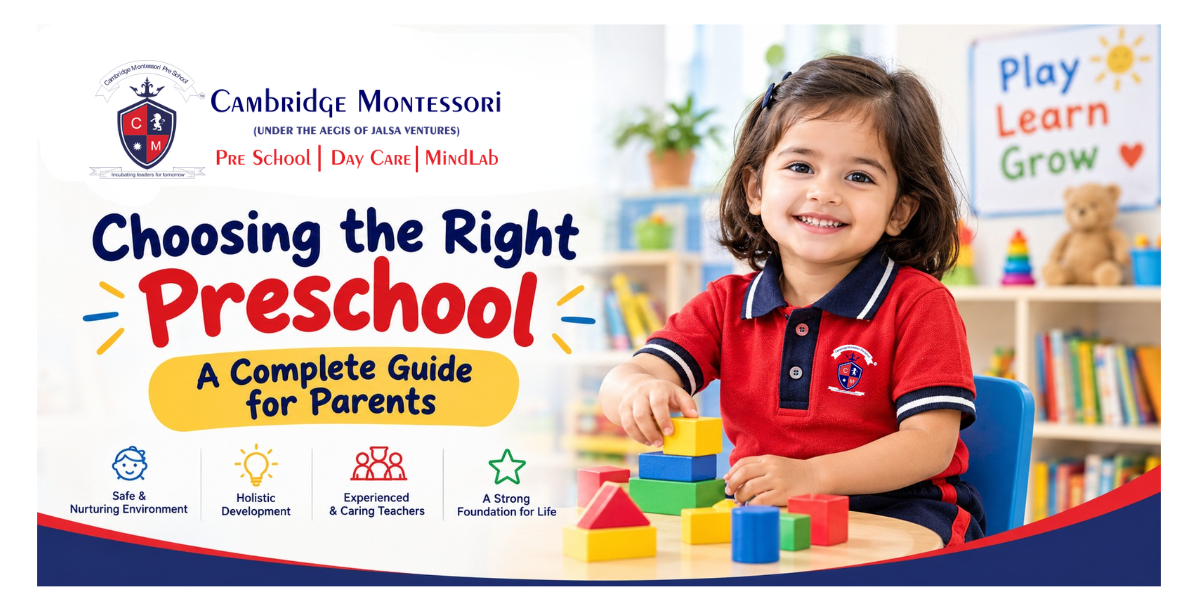
Choosing the Right PreschoolA Complete Guide for Parents
Selecting the right preschool is very important for parents and children, as a good learning environment can help develop many skills and qualities such as confidence, curiosity, teamwork, and communication. As many preschool options are available today, parents need to look past the marketing and evaluate the offerings of each preschool in order to find a suitable preschool for their child.
1. Safe and Welcoming Environment
For most parents, safety is the most important aspect of a preschool. Parents should also look at the cleanliness of the classrooms, play areas, toilets and entrances of the preschool. They should enquire about visitor access, child-pick-up routines, emergency plans and first-aid arrangements. The space should feel welcoming and safe for young children, with safe toys and a secure environment.
2. The Preschool Learning Approach
The preschool learning approach consists of a play-based method where children learn through play, exploration, stories, movement and hands-on activities. Students should be encouraged to ask questions, solve problems and learn at their own individual pace, without too much academic pressure. A formal academic structure should not be imposed upon the child.
3. Meet the Teachers and Staff
Prospective parents should meet the teachers and the staff managing the preschool to understand the staff philosophy. They should observe how the staff interacts with children and should enquire about the teacher’s qualifications and training. Students at this age should feel nurtured by the teachers instead of being disciplined.
4. Social and Emotional Development
Preschool provides rich opportunities for children to practice taking turns, expressing emotions, building friendships, and developing independence. A well-planned preschool learning approach encourages children to participate in cooperative activities, explore their creativity, and learn to work with others through play and everyday experiences.
5. Curriculum and Daily Routine
Parents should ask for the curriculum of the preschool and enquire about student activities. A typical day should include play, language activities, stories, creative work, and rest. These activities should be designed keeping in mind the age structure of the preschool. Children should be provided with opportunities for both individual discovery and group interaction.
6. Communication with Parents
Preschools should seek to develop strong communication with parents. Teachers should share updates about learning, behaviour, friendships and progress. Questions and concerns should be welcomed by the parents. Regular communication about the child’s development matters more than structured updates about their academic performance.
7. Practical Factors
Practical factors such as location, travel time, timings, fees, holidays and transport arrangement matter when considering a preschool. A good option should not tire the parents too much. Parents should also enquire about illness policies, food arrangement and any additional costs before enrollment.
8. Visit and Trust Your Observations
Parents should try to visit the preschool when it is in session and observe how the child appears, and how the staff interact with children. Questions should be asked and options compared before making a decision based on advertisements.
Conclusion
Several factors influence the decision to send your child to a particular preschool, such as safety, curriculum, practical factors related commute and costs, the quality of teachers and staff, the learning environment and opportunities for social and emotional development of the child. By keeping these criteria in mind, parent can give a flying start to their child’s learning journey.
Frequently Asked Questions (FAQs)
Q.1. Should parents prioritize a curriculum label?
Ans: No, as the opportunities for learning and developing relationships matter more than the label.
Q.2. What is a warning sign?
Ans: Lapses in safety, harsh adult-child interaction, poor supervision or disengaged children are warning signs that the preschool is failing in providing the best learning atmosphere to the child.
Q.3. How should parents decide between two good options?
Ans: Select the school that offers a better routine and best fulfills the criteria mentioned above.
Q.4. What should parents look for when choosing a preschool?
Ans: Parents should consider the teachers’ experience, classroom safety, hygiene, learning activities, and the overall environment.
Q.5. What is the right age to start preschool?
Ans: Many children start preschool between 2 and 4 years of age, depending on their readiness and the school’s admission requirements.
Q.6. Why is preschool important for children?
Ans: Preschool helps children develop social skills, communication, creativity, independence, and early learning abilities through play and guided activities.
Q.7. How can parents check whether a preschool is safe?
Ans: Check security arrangements, cleanliness, child-friendly furniture, staff supervision, emergency procedures, and hygiene practices.
Q.8. What questions should parents ask during a preschool visit?
Ans: Ask about the curriculum, teacher-to-child ratio, daily routine, meals, safety policies, fees, and parent-teacher communication.
Q.9. How can parents prepare their child for preschool?
Ans: Introduce a regular routine, encourage independent activities, practise short separations, and talk positively about meeting teachers and other children.
Q.10. Is play-based learning important in preschool?
Ans: Yes. Play-based learning helps children explore ideas, develop language, solve simple problems, and interact with others in an enjoyable environment.