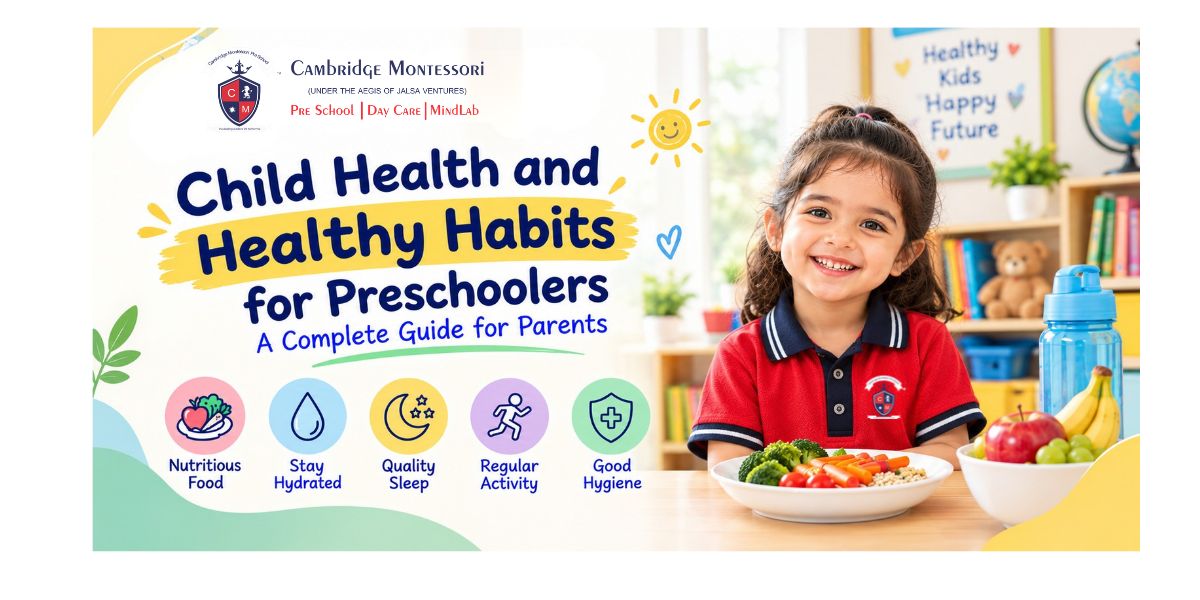
Child Health and Healthy Habits for Preschoolers A Complete Guide for Parents
The preschool years are very important for a child’s developmental journey, as children belonging to this age group develop physical strength, emotional awareness, social skills and habits that influence their well-being in the future. When children establish healthy routines, they become more active, confident and independent. Children during this age learn how to eat well, stay clean, sleep adequately and maintain an active lifestyle.
1. Encourage Healthy and Balanced Eating
Children should be encouraged to mind their diets and consume foods which provide nutrients and energy. A balanced diet with fruits, vegetables, whole grains, pulses, dairy products or other alternatives should be provided to children. Adding colours to the diet through vegetables and fruits is also a good idea as carrots, bananas, apples and spinach are excellent sources of vitamins and minerals. Children should be encouraged to add new items to their diets. Fast food and junk food should be limited, particularly fried food and sugary drinks. Mealtimes can be made more interesting by letting children participate in simple activities such as washing vegetables or peeling fruit.
2. Build Good Hydration Habits
Water is essential for the body’s overall health. Young children should be repeatedly reminded to consume water as they forget to drink enough water while they play. A child-friendly water bottle should be provided to children at home and at school. Sugary drinks should be restricted.
3. Promote Daily Physical Activity
Daily physical activity should be promoted as it supports the development of muscles and bones, coordination and emotional wellbeing. Preschoolers should be provided many opportunities to play, and should be encouraged to join activities such as running, jumping, dancing and cycling. Playing outdoors lets children connect with nature while developing social skills. Parents and teachers should provide children with safe spaces for active play, and physical activity should be made a natural part of the day.
4. Teach Personal Hygiene and Cleanliness
Children should be taught personal hygiene and cleanliness, in order to protect them from communicable diseases. Simple habits such as washing hands with soap before eating and going to the toilet, brushing twice a day, bathing every day and keeping fingernails clean go a long way in ensuring their good health. Parents should teach these activities to children and explain their significance, while ensuring that they are supervised.
5. Establish Healthy Sleep Routines
Sleep is crucial for wellbeing, as it ensures physical growth, learning, memory and emotional regulation of children. Preschoolers require between 10 – 13 hours of sleep in a 24-hour period. Naps also have to be accommodated. It is important to develop a consistent bedtime routine which includes bathing, brushing teeth, reading a story and settling into bed. The sleep environment should be comfortable. Screen time before sleep should be avoided.
6. Support Emotional Health and Well-Being
A child’s health should include emotional well-being along with physical fitness. Preschoolers are learning how to understand and express their feelings. Children should talk about their emotions with their parents. They should spend time reading stories, playing with friends, and engaging in quality time with family to ensure their emotional wellbeing. Care should be ensured to make the child’s environment as secure as possible. Teachers should also display the qualities of kindness and patience.
7. Make Healthy Habits a Family Effort
Children emulate the behaviour of adults – when adults are active, consume balanced meals, drink adequate water, follow consistent sleep routines, children also copy these behaviours. Parents can teach their kids behaviours such as handwashing and movement activities. These behaviours should be consistently followed at home and the preschool.
Conclusion
The habits that are learned during preschool years form the foundation for lifelong learning. A healthy environment, balanced nutrition, physical activity, adequate hydration, personal hygiene, sufficient sleep and emotional support are important for a child’s healthy growth. Parents can help their child follow small routines with patience and encouragement, while serving as positive role models for their child’s development.
READ MORE: Healthy Sleep Routine for Preschoolers: Practical Tips for Parents
Frequently Asked Questions (FAQ’s)
Qus1. Do families need a perfect schedule?
Ans: No, but a consistent daily routine helps children develop healthy habits.
Qus2. Which habit should we start first?
Ans: Start with simple habits, such as handwashing, drinking water and eating balanced meals.
Qus3. Can preschool reinforce home habits?
Ans: Yes, preschools can reinforce healthy eating, hygiene, sleep and daily routines.
Qus4. What foods are healthy for preschoolers?
Ans: Fruits, vegetables, whole grains, pulses and dairy products support healthy growth.
Qus5. How much water should preschoolers drink?
Ans: Water needs vary with age, activity and weather, so offer water regularly throughout the day.
Qus6. Why is physical activity important for preschoolers?
Ans: Physical activity supports muscle development, coordination and emotional wellbeing.
Qus7. How can parents teach personal hygiene?
Ans: Encourage regular handwashing, daily bathing, toothbrushing and clean fingernails.
Qus8. How many hours of sleep do preschoolers need?
Ans: Most preschoolers need around 10–13 hours of sleep in 24 hours, including naps.
Qus9. How can parents support children’s emotional health?
Ans: Listen to their feelings, offer reassurance and create a safe, supportive environment.
Qus10. How can families encourage healthy habits?
Ans: Parents can model healthy behaviours and follow consistent routines with patience and encouragement.
References
- WHO guidelines on physical activity sedentary behaviour and sleep for children under 5
- World Health Organization Healthy Diet
- UNICEF How to Teach Your Kids Handwashing
Health note: This article provides general educational information and does not replace advice from a paediatrician or another qualified professional.