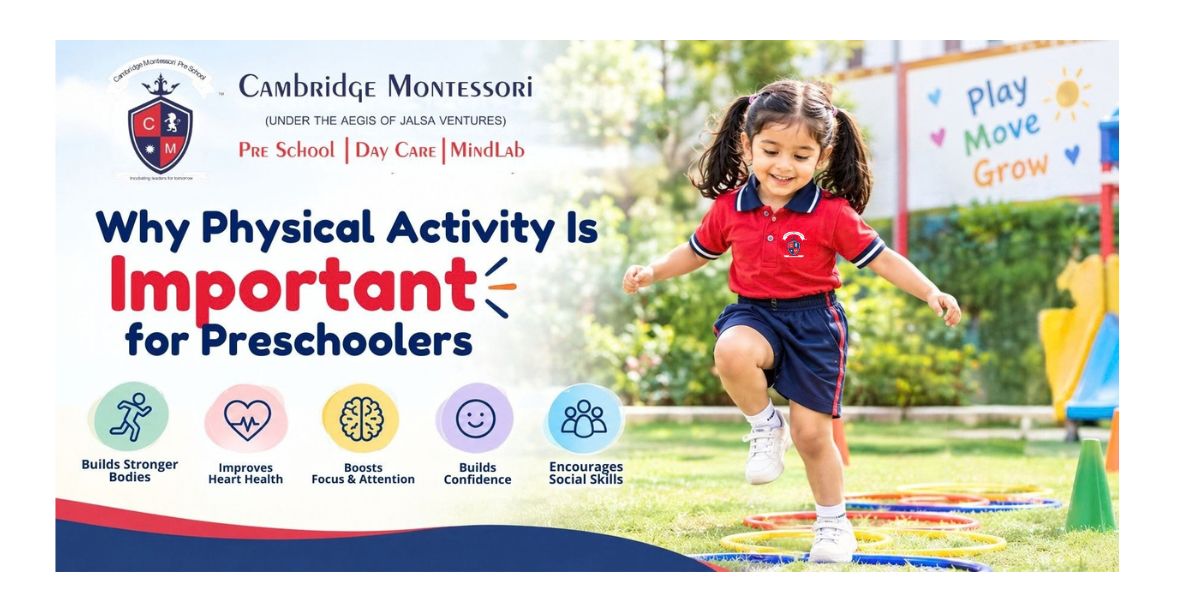
Why Physical Activity Is Important for Preschoolers
Physical activity provides several advantages for preschoolers, such as improving their movement skills, confidence, sleep routine, as well as providing opportunities for social development. Understanding Why Physical Activity Is Important for Preschoolers helps parents and educators recognise how regular movement supports children’s overall growth. It differs from adult exercise because it is less intense and more exploratory, and includes activities such as running, climbing, dancing, balancing, throwing, carrying, and energetic pretend play.
Young Children and Movement
According to WHO, children between the ages of three and four require at least 180 minutes of diverse physical activity in a day, including a minimum of 60 minutes of moderate-to-vigorous physical activity [1].
Physical activity can be carried out through short bursts divided throughout the day rather than being concentrated in one session. According to the US Centers for Disease Control and Prevention, physical activity benefits children’s attention, memory, muscles, bones and cardiovascular health [2].
Children should perform activities which are enjoyable to them and those which correspond to their abilities.
Easy Ways to Build an Active Day
To make your child’s day more active, actions such as walking, using the playground, dancing to music and playing games such as follow-the-leader or throwing softballs into a basket can be carried out. Children should frequently be taken outdoors when the air quality and weather are good. Avoid the pressure to teach a particular sport so early, as preschoolers benefit a lot from free play. Adults can play alongside without controlling or leading the game.
READ MORE :Healthy Sleep Routine for Preschoolers: Practical Tips for Parents
Safety and Inclusion
To maintain the safety of children, a preschool environment should include checked surfaces and play equipment, access to water, helmets when needed, and close supervision when children are playing near roads or with water. For children with disabilities or medical conditions, activities should be adapted according to the advice of medical professionals.
FAQ’s
Q1: How much physical activity should preschoolers get each day?
Ans: Preschoolers benefit from regular movement throughout the day, including active play, outdoor activities, and short bursts of energetic movement.
Q2: Why is physical activity important for preschoolers?
Ans: Physical activity supports movement skills, balance, coordination, confidence, healthy sleep routines, and opportunities for social development.
Q3: Does active play need to be continuous?
Ans: No, physical activity does not have to be continuous. Children can stay active through several short periods of movement and play throughout the day.
Q4: Is yoga enough as a physical activity?
Ans: Yoga can support flexibility, balance, and body awareness, but children also benefit from free play, active games, running, climbing, dancing, and other energetic activities.
Q5: What if my child dislikes organized sport?
Ans: Organized sports are not essential for staying active. Children can enjoy dancing, outdoor games, cycling, household movements, pretend play, or other activities they find enjoyable.
Q6: What are some simple physical activities for preschoolers?
Ans: Running, jumping, climbing, dancing, balancing, throwing, carrying, and energetic pretend play are simple ways to encourage movement.
Q7: How can parents encourage physical activity at home?
Ans: Parents can provide opportunities for active play, join children in games, limit long periods of sitting, and make movement a natural part of everyday routines.
Q8: How can preschools make physical activity enjoyable for children?
Ans: A preschool can offer a safe environment with age-appropriate games, outdoor play, movement activities, music and dance, and opportunities for children to explore different types of movement.
Q9: How can children stay safe during physical activities?
Ans: Adults should check play surfaces and equipment, provide access to water, use protective equipment such as helmets when appropriate, and closely supervise children around roads and water.
Q10: Can physical activities be adapted for children with disabilities or medical conditions?
Ans: Yes. Activities can be modified according to the child’s abilities and needs, with guidance from appropriate medical professionals when required.
References
- WHO guidelines on physical activity sedentary behaviour and sleep for children under 5
- CDC Health Benefits of Physical Activity for Children
Health note: This article provides general educational information and does not replace advice from a paediatrician or another qualified professional.