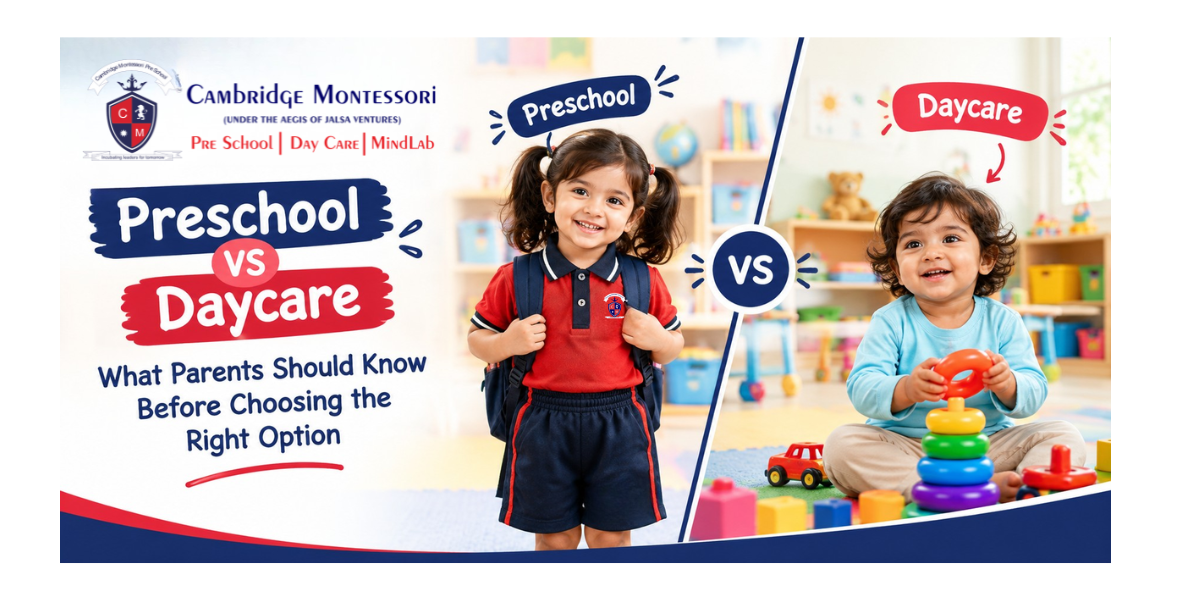
Preschool vs Daycare: What Parents Should Know Before Choosing the Right Option
Deciding upon a preschool or daycare is an important decision for families. Both preschool and daycare provide a place for children to spend time, learn, and communicate with others. However, their purposes are different—which must be kept in mind before selecting between a preschool and daycare.
What Is a Preschool?
A preschool is a dedicated space that is designed to prepare students for formal schools. It caters to students between the ages of three and five, with the age ranges depending upon the provider and local rules. Preschools follow a dedicated routine with activities that develop a child’s language, early numeracy, creativity, motor skills, and social development. Children are taught lessons through stories, music, art, puzzles, and group activities.
What Is a Daycare?
A daycare is established to provide supervised care for young children when their parents are busy with work or other responsibilities. It may accept babies, toddlers, and preschool-age children. The daily routine at a daycare includes meals or snacks, playtime, rest, and opportunities to socialize. Many daycare centers also offer learning activities, but they mainly seek to provide safe, dependable care for some hours of the day.
Key Differences Parents Should Consider
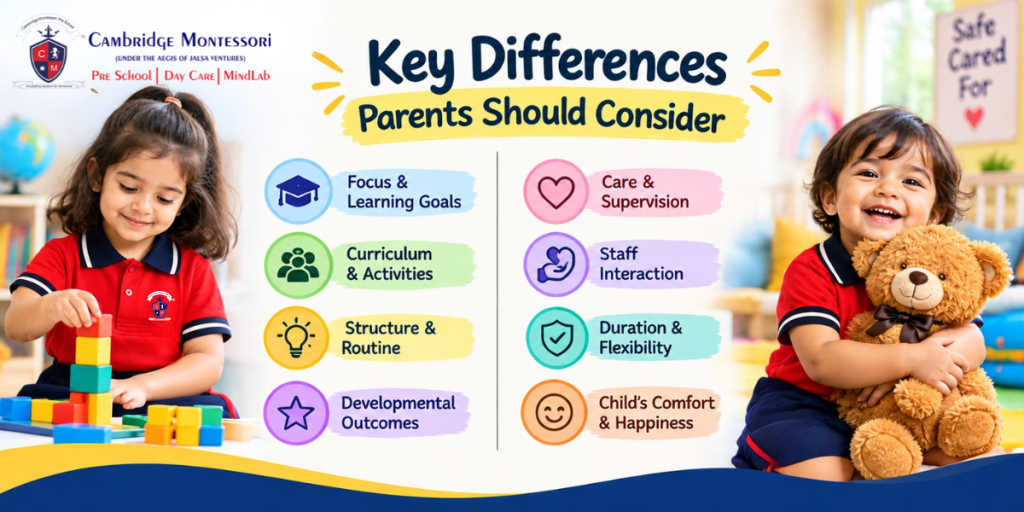
There are a few key differences between the two—preschools provide dedicated learning, while daycares focus on child supervision and day-to-day care. Preschools often have shorter hours with a defined curriculum, while daycares provide supervision for longer hours and more flexibility in care. Many preschools also offer extended care, while many daycare include educational play. Parents should inquire about the program, schedule, staff qualifications, and approach to children’s development.
How to Choose the Right Option
Parents should consider their schedule. If care is required throughout the day, a daycare is more practical. If the child is prepared to learn in a group, preschool may be a good idea. The child’s temperament, sleep and meal requirements, comfort with separation, and interest in group activities should be considered before making a decision. Parents should visit the Our center beforehand and note whether the spaces are clean and child-friendly. They should inquire whether the staff responds gently and if the children have time for free play. Information should be sought about the staff-to-child ratios, safety procedures, illness policies, communication with families, fees, and emergency arrangements.
Read more: How preschool teachers support children’s social and emotional development
Can Parents Choose Both?
It is possible to choose both—a child may attend a preschool for learning and then attend daycare at the same or different center for extended care. The transition should be smooth and provide the child with enough rest, outdoor play, and family connection. Too many activities may tire children.
Conclusion
Choosing a preschool or daycare depends on the safety of the child and the quality of care provided at the center. Parents should compare services, ask questions, and observe the environment during a visit before making an admission decision. Thoughtfully selecting the right daycare or preschool can help children build essential skills, confidence, and social abilities for the years ahead.
Frequently Asked Questions (FAQs)
Q1. Is preschool better than daycare?
Ans: The quality or suitability of the program is more important than the label associated with the preschool or daycare. Individual requirements of the parents play an important role.
Q2. Can a long day harm a child?
Ans: The quality does not depend upon the duration. Relationships, rest, group size, and family circumstances play an important role.
Q3. Should siblings attend the same center?
Ans: It may make it easier for parents to manage routines, but considering each child’s needs is still important.
Q4. Is preschool better than daycare for young children?
Ans: Neither option is universally better. Preschool may suit children who are ready for structured learning, while daycare may be more suitable for families needing regular childcare. Some centers offer both services.
Q5. Can parents choose both preschool and daycare?
Ans: Yes. Some centers provide preschool sessions followed by daycare, allowing children to participate in learning activities and remain under supervision for longer hours.
Q6. How many hours do children spend in preschool and daycare?
Ans: Preschool commonly operates for a few hours per session, while daycare may provide half-day or full-day care. Timings vary by center.
Q7. What should parents check before choosing a preschool or daycare?
Ans: Parents should check staff qualifications, safety measures, cleanliness, child-to-staff ratios, learning activities, communication with parents, and emergency procedures.
Q8. Does daycare help children develop social skills?
Ans: Yes. A well-managed daycare can give children opportunities to interact with peers, share toys, communicate, and participate in group activities.
Q9. What activities do children do in preschool?
Ans: Preschool activities may include storytelling, drawing, music, movement, puzzles, play-based learning, early language development, and basic number concepts.
Q10. How can parents decide between preschool and daycare?
Ans: Consider your child’s age, developmental needs, daily routine, family schedule, and the quality of the available centers. Visiting the center and speaking with staff can help you make an informed decision.