What Should Parents Look for in a Preschool Daily Routine
For parents, it becomes very important to choose the right preschool for their child. There are many factors that influence the quality of the preschool, such as location, safety, teachers and curriculum, but the most important and overlooked factor is the preschool’s daily routine.
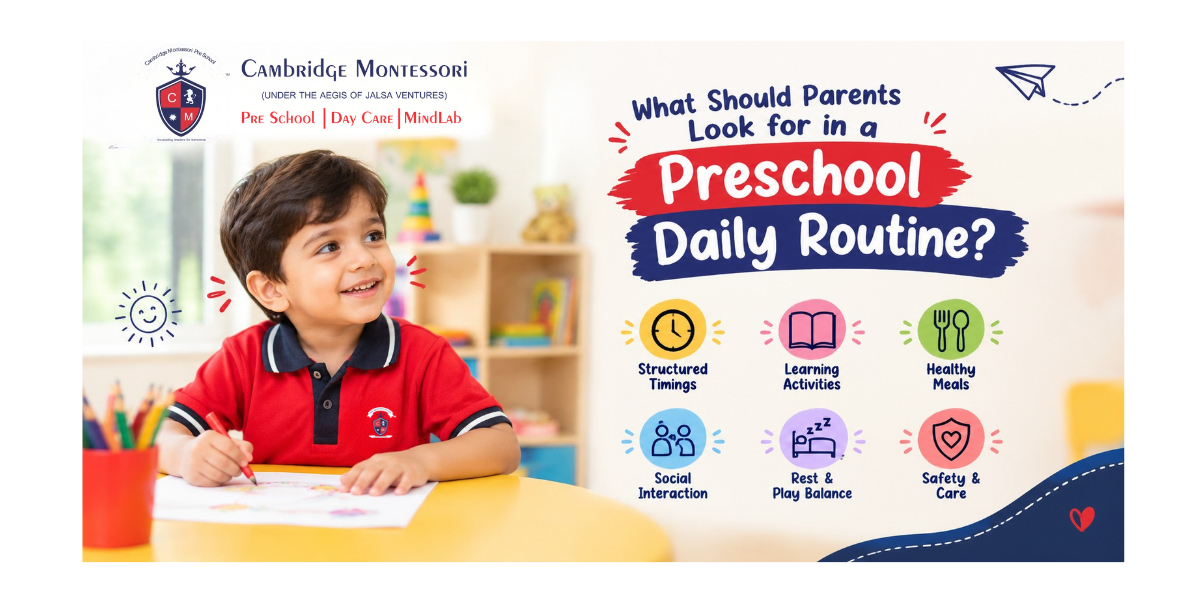
A good preschool routine should balance studies with free play, physical activities, rest and social interaction. What Parents Should Look for in a Preschool Daily Routine is important as it delineates the important activities that should be a part of the preschool routine.
1. A Warm Beginning to the Day
The day’s routine should begin with warm greetings from the teacher to the students. Teachers should support the child’s transition from home to the preschool and help them feel comfortable in the preschool environment. Children can meet their friends and participate in simple activities as they reach the preschool.
2. Balancing Structured and Flexible Activities
Preschool children’s daily routine should not be too rigid. There should be a fine balance between teacher-guided activities and child-led activities. Teachers can organize activities such as story-telling, art, music, dance or movements, while child-led activities could be building blocks, pretend play, solving puzzles, drawing and figuring out the learning material. This extends the children’s creativity and critical thinking skills.
3. Student-led Play
A good preschool routine should provide opportunities for both indoor and outdoor play. Play encourages students’ cognitive development almost as much as academic lessons, and teaches them skills in communication, coordination, creativity, cooperation, decision making and problem solving. Parents should be wary of routines that stress upon academic learning and worksheets at the expense of play.
4. Outdoor Activities
Activities such as running, jumping, simple exercises and movement are very important for a child’s physical development. A good preschool should encourage supervised outdoor activities instead of letting students stay indoors or be seated all the time.
5. Creative Activities
A healthy daily routine should also include activities such as art, craft, music, storytelling and drama, as these activities encourage students to express themselves and also develop confidence, fine motor skills, imagination and communication skills.
6. Social Interaction
Children should be encouraged to interact with the other children in their environment, by working together on activities that encourage collaboration. Activities such as group games, circle time, pretend play and story-telling help students develop important social and emotional skills.
7. Everyday Routines
Parents should encourage children to develop independence and life skills, and involve them in activities such as washing hands, putting away toys and cleaning up after activities. The focus should not be merely on academic learning, but on making children more independent and self-driven.
8. Snacking Time
If children bring snacks to the preschool or if the preschool provides snacks, mealtime should be incorporated into the daily preschool routine. Children can be taught table manners, healthy eating habits and independence. Teachers should also be made aware about any food allergies.
9. Quiet Time
Periods of quiet activity and relaxation should be included in the daily routine of preschoolers. It may involve story-time, quiet reading or quiet relaxation activities. This provides the children an opportunity to rest between periods of play.
10. Age-Appropriate Learning
The daily routine should also include age-appropriate learning for the students. They should be provided more opportunities for hands-on learning, and as children grow, opportunities can be made more complex.
11. An Adaptable Routine
Parents and teachers should create a routine which is adaptable for the children and corresponds to the different learning needs.
READ MORE :Life Skills for Preschoolers: Everyday Skills Every Child Should Learn
Conclusion
A good preschool routine should provide children the opportunity to grow, play, move and develop independence. Parents should look beyond the timetable and understand how the routine supports the child’s development. The best preschool routine balances the day with flexible activities, outdoor activities, student-led play, creative activities, social interaction and rest time. Cambridge Montessori Preschool provides a warm, engaging environment for the child, with routine full of activities and events to develop the child’s best potential.
Frequently Asked Questions
Q1. Should every minute be scheduled?
Ans:No, a child’s daily routine should feel flexible with time for rest, play and learning.
Q2. Is academic worksheet time essential?
Ans: Not necessarily, as a good preschool can encourage skills in literacy and maths through play and conversation.
Q.3. Should parents receive the routine?
Ans:: Yes, along with an explanation of how it may change.