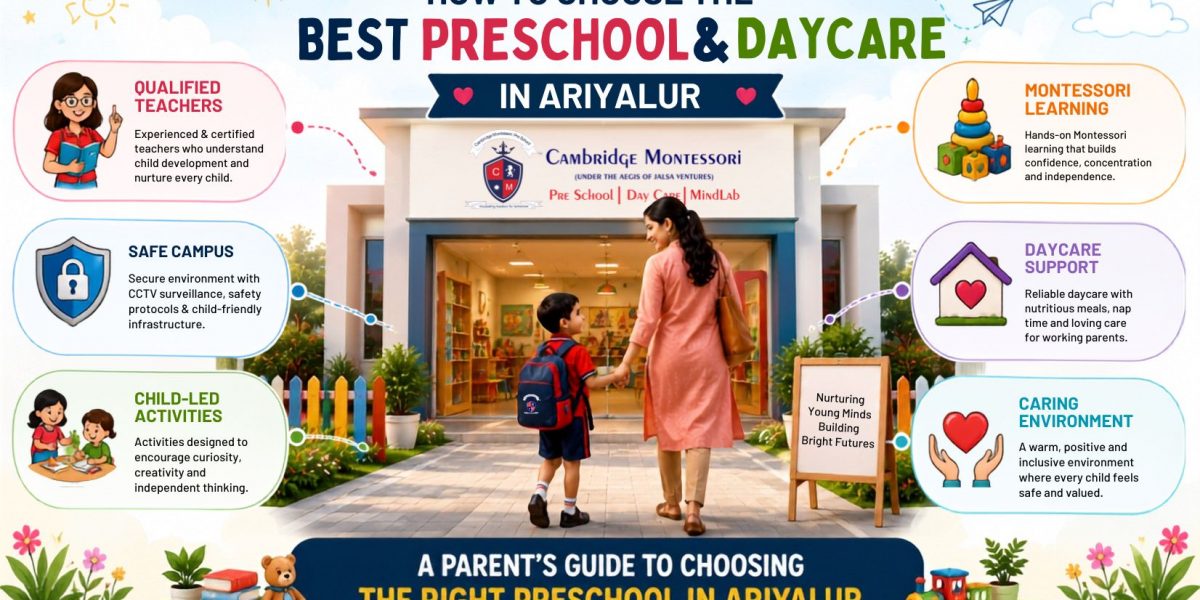
How to Choose the Best Preschool and Daycare in Ariyalur
Choosing your child’s first school is one of the most important early decisions a parent makes. If you’re wondering how to choose the best preschool and daycare in Ariyalur, it’s worth looking beyond attractive classrooms and focusing on what truly supports your child’s growth and development. As the headquarters of Ariyalur district, the town is a steady, community-rooted place where education is genuinely valued. Increasingly, parents here want more for their little ones than a school that simply keeps them occupied for a few hours—they want a nurturing preschool and daycare that builds confidence, independence, and a lifelong love of learning.
So how do you tell a genuinely good preschool or daycare from one that just looks the part? This is an honest guide to what actually matters, without the marketing gloss.
Why the Choice Feels So Important in Ariyalur
In a town the size of Ariyalur, families are often settled and closely connected, and word travels fast. That’s an advantage; your neighbors’ experiences are real, unfiltered research. But it also means the stakes feel personal, because you want a preschool that fits your child and reflects the values of your family and community.
As a district headquarters, Ariyalur has a growing base of families, government and professional workers, and small businesses, all of whom want strong early foundations for their children. The encouraging truth is that choosing well doesn’t require a big city or a big budget. It requires knowing what to look for, and here’s what that is.
1. Look at the Philosophy, Not Just the Facilities
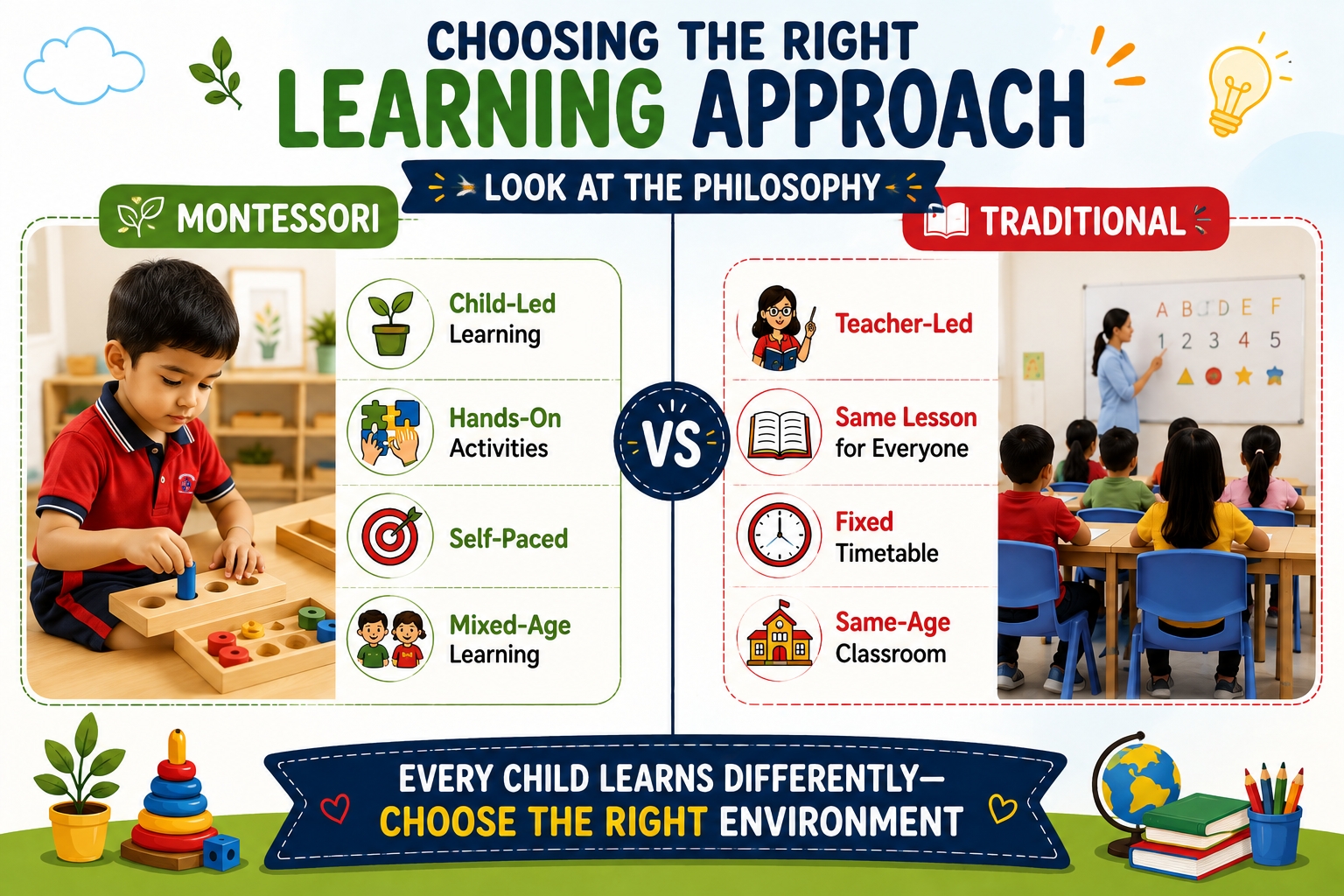
A colorful building and a few toys tell you very little about how a child actually learns. What matters is the educational approach, and broadly there are two.
The first is activity-based and child-led, where children explore, choose, and work independently through structured materials and guided play. This is the Montessori method, and the evidence for it is strong. A 2025 national randomized trial published in the Proceedings of the National Academy of Sciences found Montessori children showed significantly better reading, executive function, memory, and social skills by the end of kindergarten.
The second is teacher-directed, where the teacher leads and the whole class follows the same lesson on a set timetable. This suits some children, particularly those who thrive on structure.
Neither is universally right. But knowing the difference lets you ask the sharp questions on a visit: how much genuine choice does my child get, and what does an ordinary morning actually look like?
2. The Teacher Matters More Than the Building
The single biggest influence on your child’s day is the person who spends hours with them, not the brand or the building. On your visit, watch carefully. Do the teachers get down to the children’s level or mostly stand and instruct? Do they know each child by name and nature? Are they calm and patient when a room full of small children gets restless? Ask directly about their training and how long they’ve worked with this age group. A warm, well-trained teacher in a modest room will do far more for your child than an impressive-looking setup with rushed, undertrained staff.
Also Read: Montessori Education Guide: Everything Parents Need to Know
3. The Safety Questions That Are Non-Negotiable
Whatever the size of the town, safety is where you should never compromise. Before enrolling, confirm:
- Pick-up protocol: Who is authorized to collect your child, and how is that verified?
- CCTV: Is it in place, is it working? And can parents view it?
- Teacher-to-child ratio: for 2–3 year olds, aim for no more than one adult per 8–10 children.
- First aid: Is a trained first-aid responder always on the premises?
- Emergency plan: What happens in the first ten minutes of an incident, and when do they call you?
A school that answers these clearly and completely has genuinely thought them through. Vagueness here is a red flag worth heeding.
4. Daycare vs Preschool: Check the Full Day
Many families in Ariyalur need more than a two-hour morning session, whether because both parents work or for reliable, caring supervision through the day. A preschool and a daycare are not the same thing, and not every place does both well.
If you’re looking at a combined preschool-daycare, assess the afternoon separately, because many are lovely in the morning and become little more than a waiting room later. Ask how nap time is handled. If meals are provided, ask what’s served and how allergies are managed, and taste the food if you can. A child spending a full day there deserves an afternoon looked after as thoughtfully as the morning.
5. A Checklist for Your School Visit
Take this with you when you visit:
- Does the classroom feel calm or chaotic?
- Are children absorbed in activities or drifting aimlessly?
- Do teachers interact warmly with individual children?
- Are learning materials on open, child-accessible shelves?
- Is the outdoor play space safe and adequate?
- Does the school update parents regularly, not just at term-end?
- Are the washrooms child-sized and clean?
- What’s the plan if your child struggles to settle in the first weeks?
That last question is quietly revealing. A good school has a warm, clear settling-in process, not just a shrug and “all children cry at first.”
6. Ask Other Ariyalur Parents
In a connected town like Ariyalur, other parents are your most honest source of information. Neighbors, relatives, and local family networks know which preschools genuinely care and which simply advertise well. Ask them one blunt question: “Would you send another child there?” The answer tells you more than any brochure.
Cambridge Montessori Global in Ariyalur
We’re proud to bring Cambridge Montessori Global to Ariyalur, at Rajaji Nagar, offering an authentic, research-backed Montessori environment right here in the town.
Our center offers a genuine Montessori prepared environment with trained guides, real self-correcting materials, and mixed-age learning, not a preschool that merely borrows the name. Where families need it, full-day care is designed with the same thought as the morning, so quality doesn’t fade after lunch. Small class sizes let teachers truly know every child, their pace, their interests, and their particular way of understanding the world, and regular parent communication keeps you closely involved in your child’s progress.
The rooted, education-minded families of Ariyalur are exactly who Montessori serves best. Book a free visit to Cambridge Montessori Global, Ariyalur — come during a working morning, watch the children, ask every question on your list, and decide from what you see.
The Bottom Line
Choosing a preschool or daycare in Ariyalur doesn’t have to be daunting. Set the brochures aside, visit in person, watch the teachers closely, ask the safety questions directly, and trust what the children’s faces tell you. A calm, happy child absorbed in purposeful work says more than any advertisement ever could.
Your child’s early years are the foundation, not a rehearsal. Choose accordingly.
You May Also Like: How Montessori Learning Supports Children’s Emotional Growth
FAQ (Frequently Asked Questions)
Q1: What is the best age to start preschool in Ariyalur?
Ans: Most children are ready for a structured preschool programme between 2.5 and 3 years, which gives them time to settle and build independence before primary school.
Q2: How do I find a good daycare near me in Ariyalur for working parents?
Ans: Look closely at the teacher-to-child ratio, the quality of the afternoon programme, meal standards, how regularly the school communicates, and its emergency protocol. Visit during the afternoon, not just the morning.
Q3: Is a Montessori preschool a good choice in Ariyalur?
Ans: For most children, yes, and research consistently shows strong outcomes. The best test is simply to visit and watch how your child responds to the environment.
Q4: How far in advance should I apply for a preschool in Ariyalur?
Ans: It’s wise to apply a few months ahead of your preferred intake, especially for the summer admission season, as good preschools fill their limited places early.
Q5: What should I look for when visiting a preschool in Ariyalur?
Ans: During your visit, observe how teachers interact with children, whether classrooms are clean and child-friendly, and if children seem happy and engaged. Also, ask about the curriculum, safety measures, teacher qualifications, outdoor play, and how the school communicates with parents.
Q6: What is the difference between a preschool and a daycare in Ariyalur?
Ans: A preschool focuses on early learning, social development, and school readiness through structured activities. A daycare provides extended care for children while parents are at work, including supervised play, meals, rest time, and daily routines. Many schools in Ariyalur offer both services under one roof.
Q7: Why is the teacher-to-child ratio important in a preschool?
Ans: A good teacher-to-child ratio ensures every child receives individual attention and support. Smaller class sizes help teachers understand each child’s learning style, encourage participation, and create a safe and nurturing environment for early development.
Q8: How can I tell if a preschool in Ariyalur is safe for my child?
Ans: Look for secure entry and exit systems, CCTV surveillance, trained staff, child-friendly classrooms, clean washrooms, first-aid facilities, and a clear emergency response plan. A trustworthy preschool will be happy to explain its safety policies to parents.
Q9: How can parents help their child adjust to preschool?
Ans: Start by talking positively about school, following a consistent daily routine, and encouraging small acts of independence at home. During the first few weeks, a gradual settling-in process and regular communication with teachers can help your child feel comfortable and confident.
Q10. Why is parent-school communication important in preschool?
Ans: Regular communication helps parents stay informed about their child’s learning, behavior, and daily activities. It also allows teachers and parents to work together to support the child’s emotional, social, and academic development both at school and at home.