How to Improve Communication Skills in Preschoolers at Home
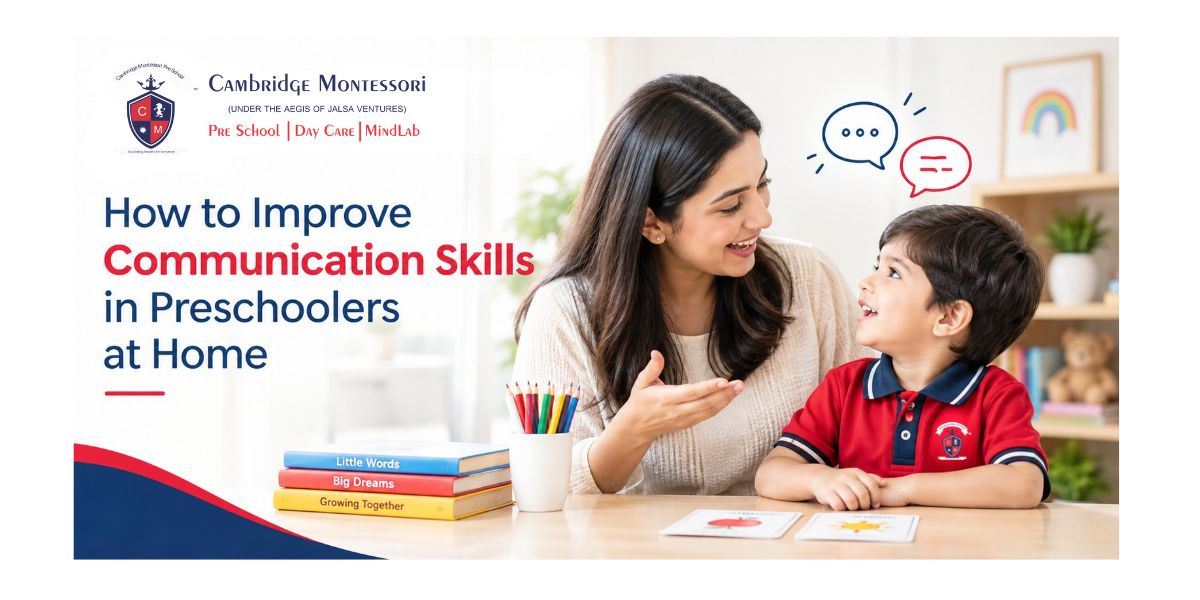
Communication skills for preschoolers develop during normal conversation. Children learn vocabulary, listening, and storytelling skills from adults by observing their reactions and exchanges. For parents wondering How to Improve Communication Skills in Preschoolers at Home it is important to maintain a good quality of interaction rather than formalizing every moment into a lesson. Simple conversations, active listening, storytelling, and encouraging children to express their thoughts can support communication development naturally.
Follow the Child and Add Language
When a child points towards an object, respond verbally to that interest. These exchanges are described by Harvard as serve and exchange interactions that develop the brains architecture [1]. Verbalize and add more ideas to the child’ s observations: if a child says yellow car, reply that the yellow car is moving quickly.
Create Reasons to Talk
Sit with your child to read out picture books, describe family photos, cook meals together and involve pretend play. Ask open but answerable questions on what happens next or how something could be fixed. Let the child answer at his own pace.
Support Listening and Turn Taking
Teach kids how to hold eye contact without forcing it, listen to what they say without finishing sentences and take turns while playing games. Keep your language and gestures clear. Frequent interactions in any language spoken at home develops and improve communication.
READ MORE:How to Improve Concentration in Preschoolers Through Everyday Activities
When to Seek Advice
Ask a pediatrician or a speech-language expert about any difficulty in understanding simple directions, persistent frustration, loss of language, or unclear speech that disrupts communication. A supportive preschool environment can also provide opportunities for children to practise listening, speaking, and social interaction through everyday activities. The CDC also provides a guide on overall child development milestones for children.[2].
FAQ’s
Q1: How can parents improve communication skills in preschoolers at home?
Ans: Parents can encourage communication through everyday conversations, storytelling, reading, singing, and giving children opportunities to express their thoughts.
Q2: How important is listening for communication development?
Ans: Listening is an important part of communication. Parents can model active listening by giving children their full attention and responding to what they say.
Q3: Should parents correct every grammatical error?
Ans: No. It is usually better to model the correct sentence naturally during conversation rather than interrupting the child frequently.
Q4: Does reading the same book repeatedly help?
Ans: Yes. Repeated reading can help children become familiar with words, sentence patterns, characters, and storytelling sequences.
Q5: Can asking questions improve a child’s communication skills?
Ans: Yes. Open-ended questions can encourage children to describe experiences, explain ideas, and use more words when responding.
Q6: Should parents encourage children to tell stories?
Ans: Yes. Storytelling gives children opportunities to practise vocabulary, sequencing, imagination, and expressing ideas clearly.
Q7: Can gestures support communication in preschoolers?
Ans: Yes. Gestures can support spoken communication and help children express their needs, ideas, or emotions.
Q8: How can parents encourage children who are reluctant to talk?
Ans: Parents can create relaxed opportunities for conversation and talk about activities the child already enjoys without putting pressure on them to respond.
Q9: Can everyday activities help develop communication skills?
Ans: Yes. Activities such as cooking, shopping, playing, drawing, and getting ready for the day provide natural opportunities for conversation and new vocabulary.
Q10: Is it important to give children time to respond?
Ans: Yes. Giving children enough time to think and respond can encourage them to participate more actively in conversations and express their ideas.
References
- Harvard Center on the Developing Child Serve and Return Interaction
- CDC Developmental Milestones and Child Development
Health note: This article provides general educational information and does not replace advice from a paediatrician or another qualified professional