Is Your Child Ready for Preschool?
Every parent reaches this moment. Your toddler is suddenly asking endless questions, copying everything you do, and getting restless at home — and you find yourself wondering whether it’s time. Here’s a fact worth knowing as you decide: according to Harvard University’s Center on the Developing Child, around 90% of a child’s brain development happens before the age of five, with over a million new neural connections forming every second in the early years. The right preschool learning environment, at the right time, matters more than most of us realise.
What Does It Mean When a Child Is Ready for Preschool?
Readiness isn’t about age alone, and it certainly isn’t about whether your child can recite the alphabet. It’s about whether they can engage with a structured environment — staying curious, managing brief separations from you, and interacting with other children. Most children show these signs between 2.5 and 3.5 years, but every child’s timeline is different, and that’s perfectly normal.
Key Signs Your Child Is Ready for Preschool
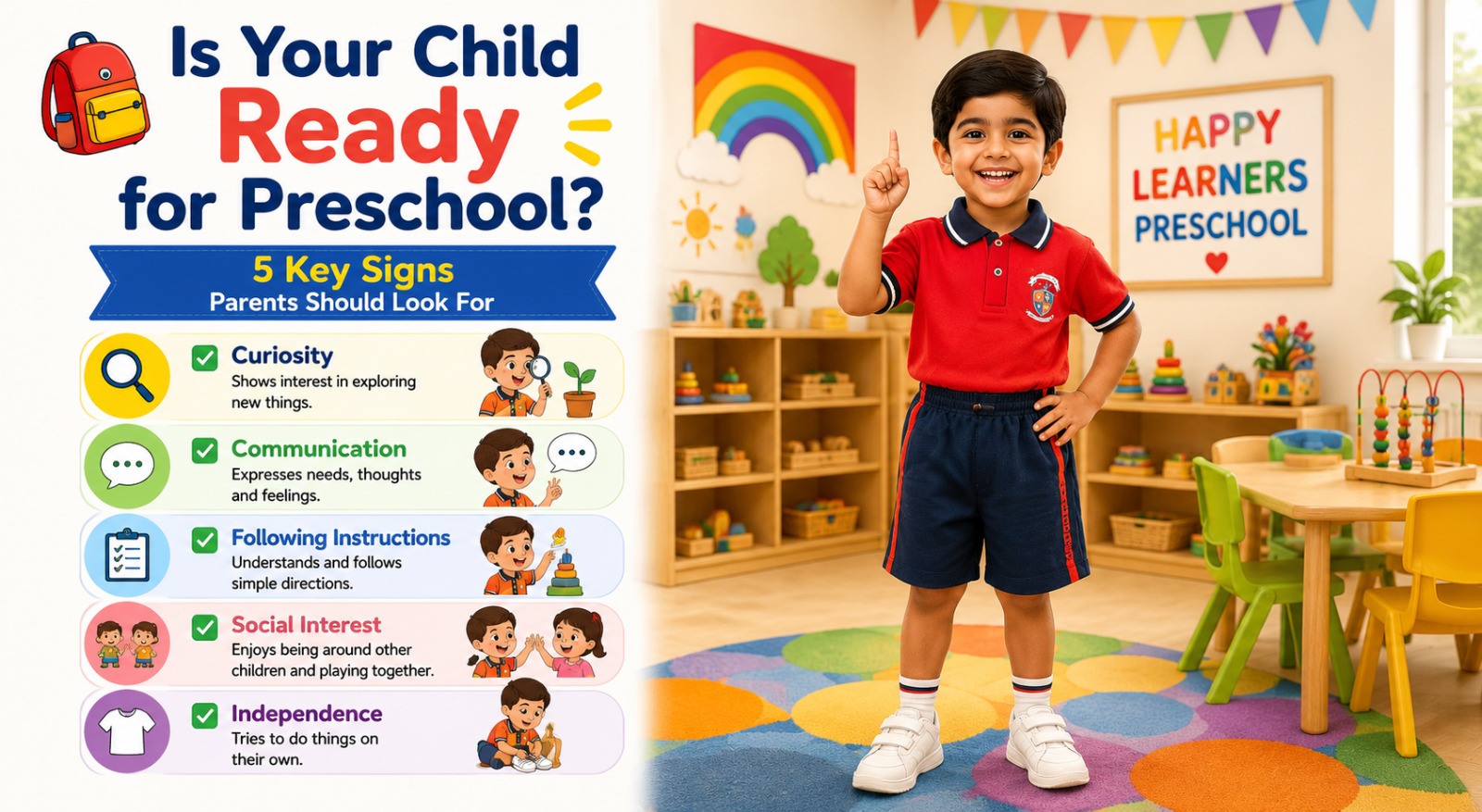
- They can spend short periods away from you without prolonged distress
- They show curiosity — asking questions, exploring, imitating daily tasks
- They can follow simple two-step instructions
- They’re beginning to communicate needs in words, even imperfectly
- They show interest in other children, even if they don’t yet play together
If your child ticks three or more of these, they’re likely ready to thrive in early childhood education.
Developmental Milestones Every Parent Should Know
By age three, most children can speak in short sentences, sort shapes and colours, manage stairs with support, and engage in pretend play. These milestones in child development are guides, not deadlines — but if several feel far off, a conversation with your paediatrician before enrolment can help.
How Do Montessori Benefits Help Children Prepare for Preschool?
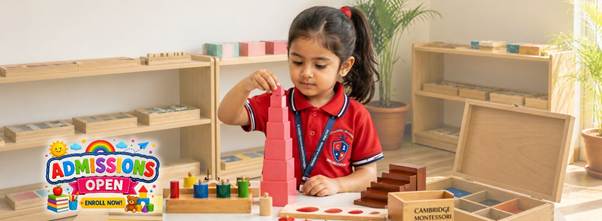
The evidence here is genuinely strong. A landmark study published in Science (Lillard & Else-Quest, 2006) found that Montessori children outperformed peers in reading, maths, executive control and social cognition. More recently, a 2025 national randomised controlled trial published in the Proceedings of the National Academy of Sciences followed 588 children and found Montessori preschoolers finished kindergarten with significantly better reading, memory and social understanding. The Montessori benefits come from its method: children choose meaningful work, learn at their own pace, and build independence — exactly the skills preschool readiness demands.
Social and Emotional Skills for Preschool Success
Academic ability matters far less at this age than emotional foundations: taking turns, expressing feelings in words, recovering from small disappointments, and trusting adults other than parents. The same Harvard research shows these early social-emotional circuits form the architecture for lifelong learning and mental health.
How Can Parents Support Preschool Readiness at Home?
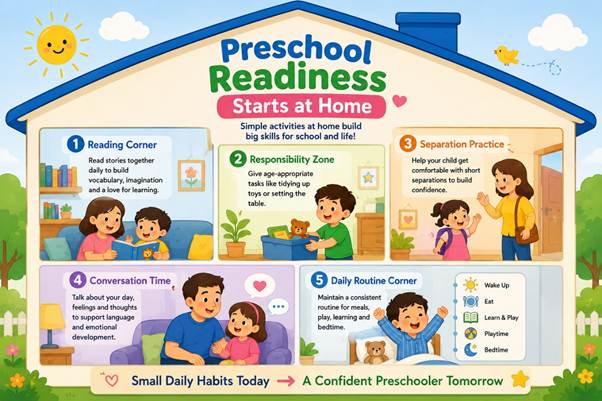
Read together daily and talk about the pictures. Give your child small real responsibilities — watering a plant, putting toys away. Practise short separations with trusted family. Narrate your day to build vocabulary. And build a predictable routine; children settle into preschool faster when rhythm feels familiar.
How Can You Choose the Right Preschool Near You?
When searching for a preschool near me, go beyond the brochure. Visit in person. Watch how teachers speak to children. Ask about teacher-child ratios, safety protocols and the curriculum’s basis in child development research. The best preschool in India for your family is the one where your child is treated as an individual — which is why many parents seeking the best nursery school in India choose the Montessori approach.
At Cambridge Montessori Preschool India, our classrooms are built on exactly these principles — child-led learning, trained educators and environments designed for this once-in-a-lifetime window of development. And as children grow, our Shard Center for Innovation extends the same hands-on philosophy into AI, robotics and future-ready skills.
Trust your observations, prepare gently at home, and visit a centre near you. Your child may be more ready than you think.
References
- Center on the Developing Child, Harvard University — The Science of Early Childhood Development (developingchild.harvard.edu)
- Lillard, A. & Else-Quest, N. (2006). Evaluating Montessori Education. Science, 313(5795)
- Lillard, A. S. et al. (2025). A national randomized controlled trial of the impact of public Montessori preschool. PNAS. DOI: 10.1073/pnas.2506130122
Frequently Asked Questions (FAQs)
1. What is the ideal age for a child to start preschool?
Most children are ready for preschool between 2.5 and 3.5 years of age. However, preschool readiness depends on factors such as communication skills, curiosity, social interaction, and the ability to spend short periods away from parents.
2. How can I tell if my child is ready for preschool?
Some common signs of preschool readiness include following simple instructions, expressing basic needs verbally, showing curiosity about the world, interacting with other children, and managing brief separations from parents without significant distress.
3. What are the benefits of Montessori preschool education?
Montessori education encourages independent learning, problem-solving, creativity, and self-confidence. Children learn at their own pace through hands-on activities, helping them develop academic, social, and emotional skills in a supportive environment.
4. How can parents prepare their child for preschool at home?
Parents can support preschool readiness by reading with their child daily, establishing consistent routines, encouraging independence through small responsibilities, practicing short separations, and providing opportunities for social interaction with other children.
5. What should parents look for when choosing a preschool?
When selecting a preschool, consider factors such as qualified teachers, child-to-teacher ratios, safety measures, learning environment, curriculum approach, communication with parents, and whether the school supports the overall development of the child through age-appropriate activities and experiences.