How Preschool Teachers Support Childrens Social and Emotional Development
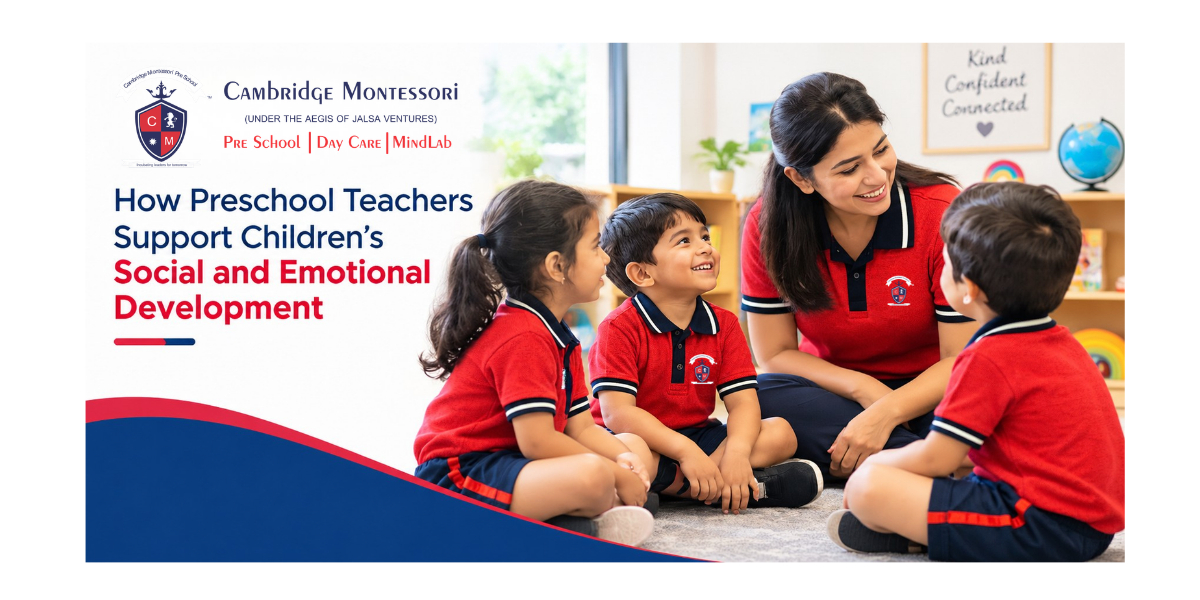
Preschool is a crucial stage in a child’s life as during these years, children develop their feelings, build relationships, communicate their needs, cooperate with others, develop confidence and independence. Preschool teachers play a crucial role in ensuring that students can develop in a safe and supportive ambience. Teachers help children to learn through everyday interactions, classroom routines and planned activities.
1. Creating a Safe and Caring Classroom Environment
Children should feel secure, accepted and valued when they learn. This sense of value is promoted by teachers who welcome children warmly, maintain good routines and patiently respond to children with kindness. Children are given the chance to explore, participate and express themselves in the classroom. Children emulate how teachers respond to children, and so learn to treat others with respect.
2. Helping Children Identify and Express Feelings
Teachers help young children with naming their emotions and teach them that it is normal to experience feelings. Teachers can verbalize student experience with sentences such as “You look disappointed because the car is being used by your friend.” Students can recognize emotions such as happiness, sadness, anger, fear and excitement. Over time children children improve at verbalizing their emotions.
3. Teaching Sharing, Cooperation, and Turn-Taking
The environment inside a preschool provides many opportunities to practice social skills. Students get a chance to interact with each other during group activities, games, art projects and pretend play. Children can grow interactively when they use phrases such as “Can we take turns?” or “How can we solve this together?”
4. Supporting Conflict Resolution
Conflicts are a natural part of early childhood, and teachers can play a role in resolving them. Teachers can help children find effective solutions, and teach them that conflicts can be resolved through communication, patience and compromise.
5. Encouraging Empathy and Kindness
Teachers can help children develop their empathy skills by making them understand and observe what others feel. Teachers can also model kindness by speaking respectfully to the children and learning that their actions can affect the feelings of others.
6. Building Confidence and Independence
Children must learn to develop a positive sense of self. Teachers should promote confidence in children by making them complete tasks independently. Teachers can reinforce positive behaviour by praising effort and encouraging students to develop a resilient state of mind and acquire a willingness to learn.
7. Using Play as a Learning Tool
Play is an effective way for children in preschool to build skills, communicate ideas, negotiate and explore emotions. Playing in groups develops cooperation skills, while creative activities let children express themselves. Preschool teachers should observe children and help them practise communication and problem-solving through engaging, age-appropriate activities.
Conclusion
Preschool teachers have an important impact on children’s development. Teachers provide a caring environment, encourage children to learn emotional vocabulary, promote cooperation among students, support conflict resolution and build independence. A positive preschool environment helps children develop into caring, confident and resilient individuals.
READ MORE : What Makes a Child Friendly Preschool Environment: A Parent’s Guide