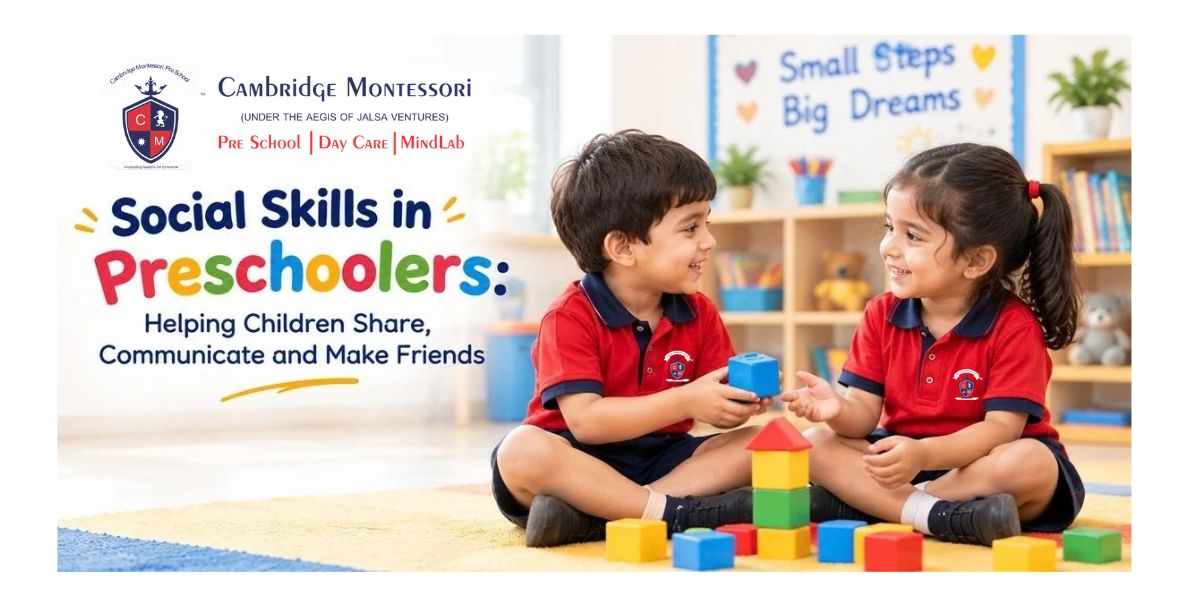
Social Skills in Preschoolers: Helping Children Share, Communicate and Make Friends
For preschoolers, sharing is only one aspect of communication. Social Skills in Preschoolers: Helping Children Share, Communicate and Make Friends also involve joining play, listening, taking turns, expressing needs, reading basic cues and recovering from conflict. These skills develop gradually through supported experience, and not through a single lecture before a play session.
Teach Entry and Turn Taking
Communication is built when children practice phrases while playing such as “Can I play?”, “What are you building?” and “Can I have a turn when you finish?”. To practice turn-taking, use a timer for high demand toys. Children must be taught to take turns over time, rather than be expected to share every personal item immediately.
Coach Conflict Without Taking Over
In case of conflict, verbalize the problem being faced, let each child speak, and help them to think of two solutions. Immediately stop hitting or other unsafe behavior among children, and guide them with repairing the situation afterwards.
Use Pretend Play and Stories
According to NAEYC, play and relationships are important from the perspective of ushering early learning [1].
Parents can role-play how a preschool child might greet a new child, ask for space, or respond when someone doesn’t agree. Create engaging stories to tell children, as they help develop imagination, while discussing characters’ motives and feelings from a safe distance.
READ MORE : How to Build Confidence and Independence in Preschoolers
FAQ’s
Q1: Why are social skills important for preschoolers?
Ans: Social skills help preschoolers communicate, make friends, take turns, express their needs and handle everyday interactions with confidence.
Q2: How can parents help children make friends?
Ans: Parents can arrange simple play opportunities, encourage group activities and help children practise greetings, sharing and taking turns.
Q3: What if my child prefers playing with one friend?
Ans: It is normal for children to create close bonds with just one friend, but parents can still provide opportunities to interact with other children.
Q4: Should children be forced to share their special toys?
Ans: No. Put away treasured toys before visitors arrive and encourage children to practise taking turns with common toys instead.
Q5: How can I teach my child to take turns?
Ans: Start with simple games and activities where everyone gets a clear turn. Use calm reminders and praise your child when they wait patiently.
Q6: What should parents do when children argue during play?
Ans: Stay calm, help children explain what happened and guide them towards simple solutions such as taking turns, using words or choosing another activity.
Q7: How can role-play improve preschoolers’ social skills?
Ans: Role-play allows children to practise greetings, asking for space, responding to disagreement and expressing feelings in a safe and playful way.
Q8: What if my child finds it difficult to join group play?
Ans: Give your child time and begin with smaller groups or familiar children. Encourage simple ways to join, such as asking, “Can I play too?”
Q9: How can stories help children understand feelings?
Ans: Stories help children explore different emotions, understand characters’ feelings and think about how their actions may affect others.
Q10: When should parents worry about a child’s social behaviour?
Ans: Seek professional guidance if your child is frequently isolated, highly distressed or consistently aggressive across different settings.
References
Health note: This article provides general educational information and does not replace advice from a paediatrician or another qualified professional.