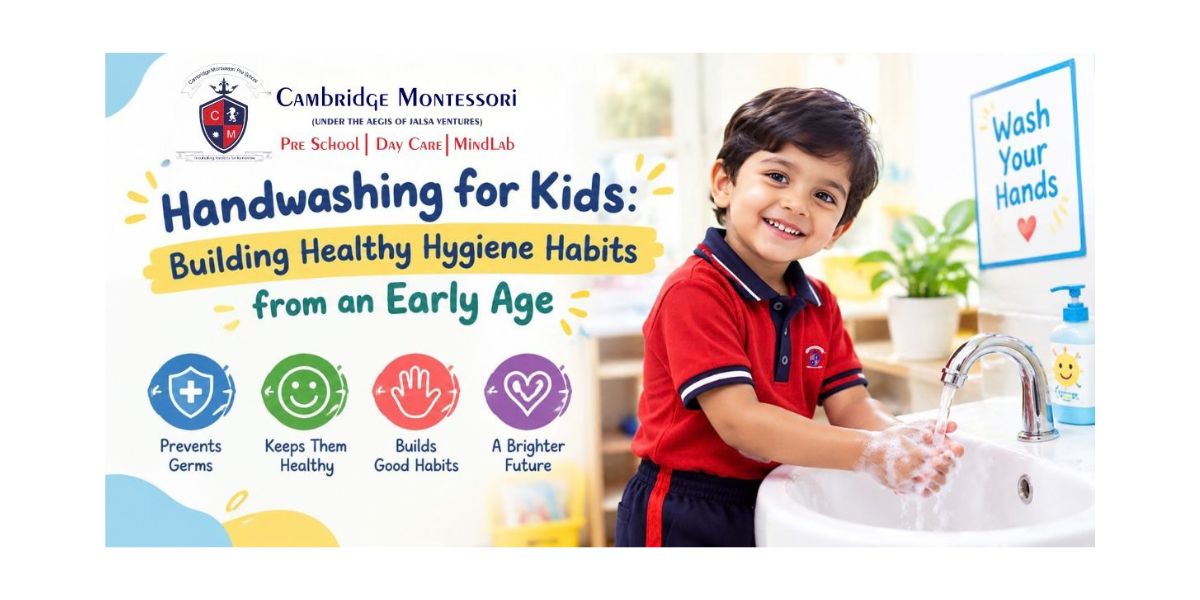
Handwashing for Kids: Building Healthy Hygiene Habits from an Early Age
For young kids, handwashing can be incorporated into fixed routines at specific times of the day. Having all the essentials, such as soap and running water, readily available ensures thorough rinsing and drying. Handwashing for Kids: Building Healthy Hygiene Habits from an Early Age is an important part of helping children understand the value of personal hygiene. This guide explains how children can learn proper handwashing habits from an early age through simple routines, demonstrations, and regular practice.
Following the Complete Sequence
According to UNICEF, handwashing follows a defined sequence. It includes wetting hands first, applying adequate soap, scrubbing the palms, backs, fingers and nails for at least 20 seconds, and then rinsing and drying with a clean towel [1]. A parent can demonstrate this sequence while the child learns through observation and copying.
A short song or a timer can be used. Children must be explained that it is important to wash hands and remove germs that can make people fall ill, instead of just knowing that hands are dirty if left unwashed.
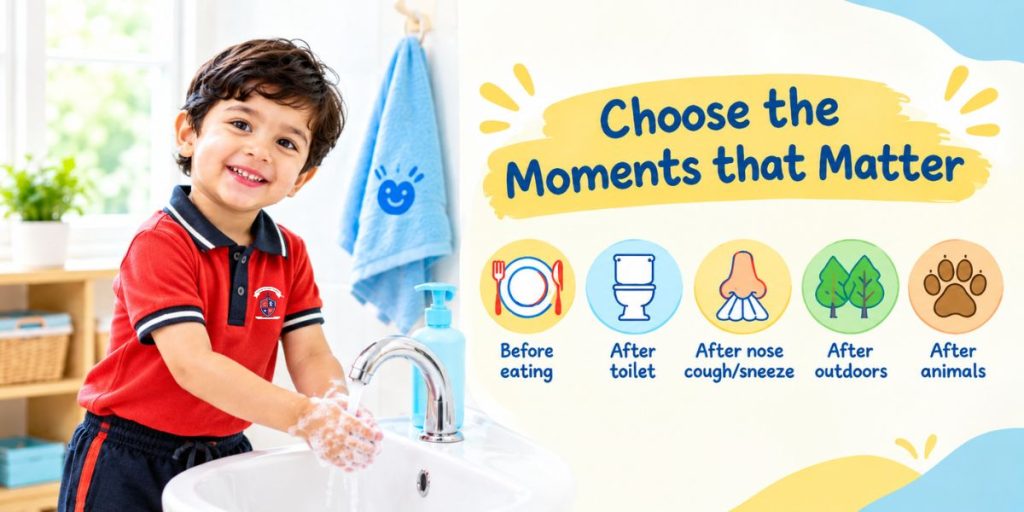
Choose the Moments that Matter
Instill the habit of handwashing before eating or touching food, after using the toilet, after blowing the nose, coughing or sneezing, after playing outdoors, and after being in contact with animals. During the admission process, parents can also ask about the handwashing routines followed by the preschool. Until children learn to wash their hands independently, they can be gently reminded by elders from time to time.
Solve Common Obstacles
Some simple props, such as a step stool to climb and an easy-to-use tap to wash hands, can remove physical barriers. A child-friendly environment with accessible sinks, soap, and suitable hand-drying arrangements can make regular handwashing easier for young children. Parents can use fragrance-free soap, if required, for sensitive skin. Hands should be gently dried, and moisturizer should be applied if there is any irritation. Medical advice can be sought if there is any bleeding or skin infection.
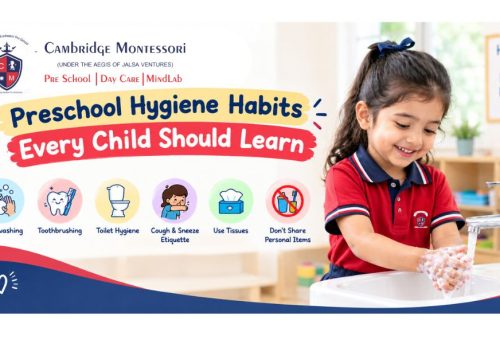
READ MORE :Preschool Hygiene Habits Every Child Should Learn
FAQ’s
Q1: Is hand sanitizer equivalent to soap and water?
Ans: Hand sanitizer can be used when soap and running water are not available, but washing hands with soap and water is preferred, especially when hands are visibly dirty.
Q2: How long should children scrub their hands?
Ans: Children should scrub their hands with soap for at least 20 seconds before rinsing them thoroughly with clean running water.
Q3: When should children wash their hands?
Ans: Children should wash their hands before eating, after using the toilet, after coughing or sneezing, after outdoor play, and after touching animals.
Q4: Should children wash their hands after playing outdoors?
Ans: Yes. Outdoor activities can leave dirt and germs on children’s hands, so handwashing after play helps maintain good hygiene.
Q5: Should children wash their hands before eating?
Ans: Yes. Washing hands before eating helps remove dirt and germs that may otherwise be transferred to food.
Q6: How can parents teach young children to wash their hands properly?
Ans: Parents can demonstrate each step, practise it regularly with children, and use simple reminders until handwashing becomes part of their daily routine.
Q7: What can schools do to encourage handwashing among children?
Ans: Schools can provide accessible sinks, child-friendly soap, clean running water, and suitable hand-drying facilities while incorporating handwashing into daily routines.
Q8: Should shared towels be used by schools?
Ans: Single-use towels or properly maintained hand dryers are preferable to shared towels, which may become unhygienic when used by multiple children.
Q9: What if a child has sensitive skin from frequent handwashing?
Ans: Parents can consider a gentle, fragrance-free soap and ensure that hands are dried properly. A suitable moisturizer may also help if the skin becomes dry or irritated.
Q10: How can a preschool environment support healthy handwashing habits?
Ans: A well-planned preschool environment can make handwashing easier by providing child-accessible sinks, soap, clean water, and clear routines that encourage children to practise good hygiene independently.
References
Health note: This article provides general educational information and does not replace advice from a paediatrician or another qualified professional.