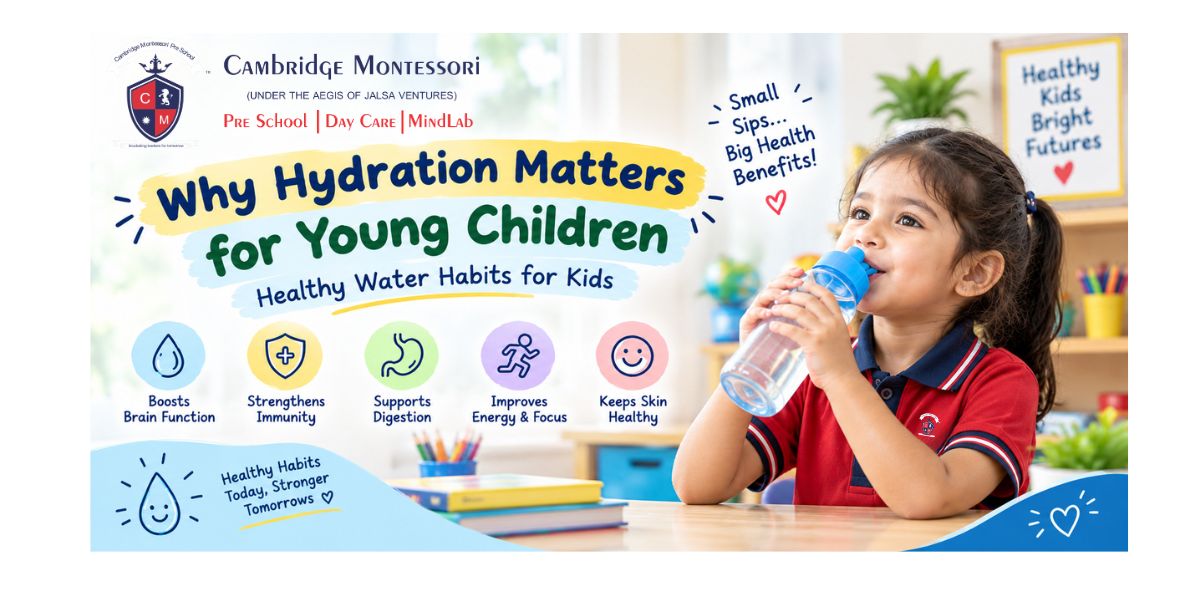
Why Hydration Matters for Young Children Healthy Water Habits for Kids
Children’s water intake habits are very important for their wellbeing. Their water intake regulates temperature control, digestion, concentration, and physical activity. Young children may often forget to drink water when they are playing, so parents need to make sure that water is visible and within their reach. A child’s water intake can increase significantly during hot weather, fever, vomiting, diarrhea, and physical activity. It is important to ensure that young children stay well hydrated, as water is an essential part of daily nutrition and supports their everyday activities. Why Hydration Matters for Young Children Healthy Water Habits for Kids is an important topic for parents to understand when building healthy hydration routines for children.
Make Water an Everyday Choice
You can keep a water bottle or cup within the reach of children, and offer them water at waking, during mealtime, before playing outside, after physical activity and when they return home. According to CDC guidelines, water is the healthiest choice of drink, and can replace sugary drinks to boost health and reduce sugar intake [1].
If needed, water can be flavored with a piece of fruit without adding sugar separately. Milk provides many nutrients but cannot replace water or meals for preschoolers. Regularly consuming sugary drinks can lead to dental and weight concerns.
Recognise Possible Signs of Dehydration
Easily recognizable signs of dehydration include thirst, a dry mouth, darker urine, less frequent urination, tiredness and irritability. Medical assessment is required if a child is unusually sleepy, urinates vey less, cannot retain fluids or appears to be unwell.
In case of vomiting or diarrhea, water alone cannot replace the salts lost by the body. To let the body recover lost salts, oral rehydration solution (ORS) packets must be administered to the child by following the product directions.
READ MORE :Healthy Snacks for Preschoolers: Easy and Nutritious Ideas for Home and School
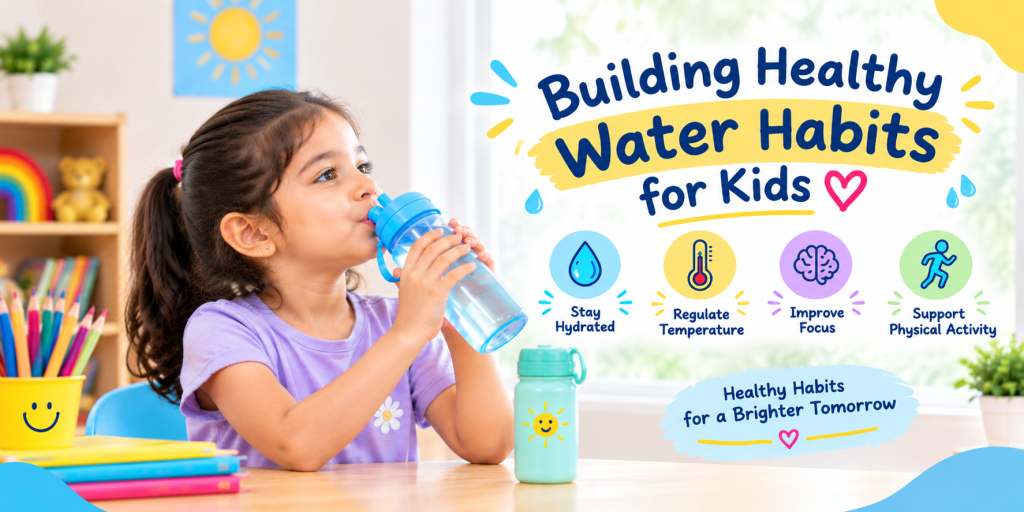
Building Healthy Water Habits
Designate predictable water breaks, and let the child drink water at other times too. Children can be reminded by teachers to drink water before and after outdoor play. Parents should send reusable water bottles daily with their child outdoors to play or to their preschools. They can make sure that children drink adequate water while they are at home.
FAQ’s
Q1: Why is water important for preschoolers?
Ans: Water helps maintain hydration and supports normal body functions, especially during active play and warm weather.
Q2: How can parents tell if a child is drinking enough water?
Ans: Urine color can provide a practical indication of hydration. Pale-colored urine generally suggests better hydration, while darker urine may indicate the need for more fluids.
Q3: Should preschoolers drink more water during hot weather?
Ans: Yes, children may need more fluids in hot weather or when they are physically active because they lose more water through sweating.
Q4: Should children be encouraged to drink water during playtime?
Ans: Yes. Offering water regularly during active play can help children maintain healthy hydration habits without forcing them to drink excessive amounts.
Q5: Can milk and other drinks count toward fluid intake?
Ans: Some beverages contribute to overall fluid intake, but plain water should remain an important everyday drink for children.
Q6: Do fruits and vegetables help keep preschoolers hydrated?
Ans: Yes. Water-rich foods such as watermelon, oranges, cucumber, and other fruits and vegetables can contribute to a child’s overall fluid intake.
Q7: Can soups contribute to a child’s hydration?
Ans: Yes, soups contain water and can contribute to fluid intake, although children should still be offered plain water regularly.
Q8: Is fruit juice a good substitute for water?
Ans: No. Although juice provides fluids, it can contain significant amounts of sugar, so it should not replace water as the main everyday drink.
Q9: Can a preschooler drink too much water?
Ans: Excessive water intake is uncommon but possible. Parents should avoid forcing children to drink more water than they need.
Q10: How can parents encourage healthy water habits in preschoolers?
Ans: Keep water easily accessible, offer it regularly throughout the day, use a child-friendly bottle or cup, and encourage children to drink during meals and active play.
References
Health note: This article provides general educational information and does not replace advice from a paediatrician or another qualified professional.