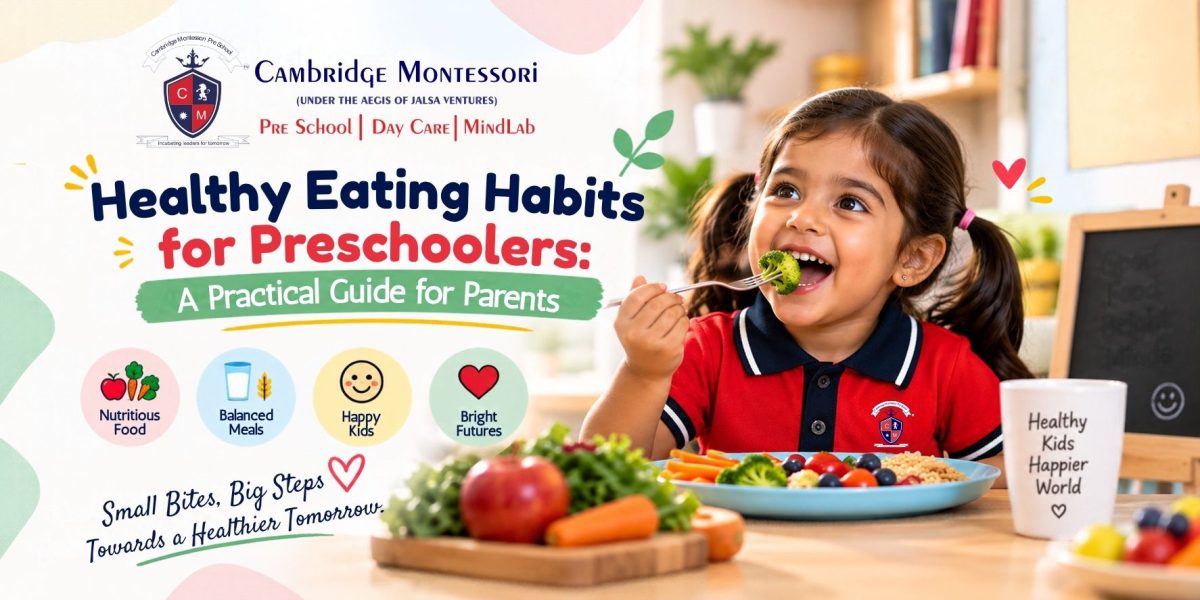
Healthy Eating Habits for Preschoolers: A Practical Guide for Parents
Healthy eating habits for preschoolers develop through consistent routines rather than pressure around a single meal. Parents can decide what food is offered and when it is served, while children can decide whether to eat and how much. This simple approach helps children recognize their hunger and fullness, explore different foods, and gradually build healthy eating habits that can support a positive mealtime routine.
Providing a Balanced Preschool Diet
A balanced preschool diet should include food which contains adequate quantities of vegetables and fruits, grains, protein rich foods such as diary, dry fruits and other alternatives. According to WHO, a healthy diet should be varied and without too much of salts, fats and free sugars. A diet which is carefully followed according to the above paradigm ensures that children receive a diet with the required nutrients and energy.
Indian foods can be readily substituted where possible: Dal, paneer, eggs, roti and curd are all protein rich offerings of Indian food. Vegetables and fruits should accompany each meal, while the choice of food should be subject to any allergies. Daily water intake should be adequate, while sugary drinks should be avoided.
Building Healthy Food Habits
Parents can support these habits by creating simple routines and involving children in age-appropriate activities at home. Learn more about the role of parents in early education.. Let the food portions be small, and allow additional helpings. The National Health Service, UK, recommends diets which contain diverse fruits, vegetables and protein sources. Diversity in the diet ensures a diverse gut microbiome and good health.
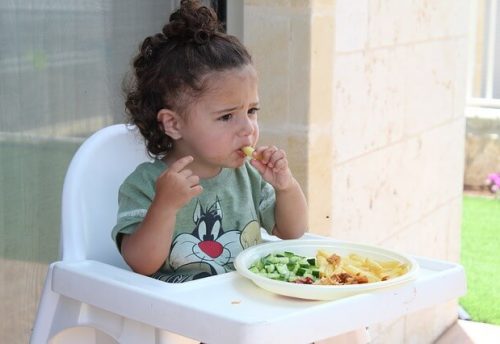
Do not bribe your child to eat the vegetables on his or her plate and leave it clean. Calmly expose the child to different foods without the pressure to turn eating into a contest.
Make Children a Part of the Routine
These simple activities can also encourage independence and practical life skills, which are important parts of early childhood learning. Restrict the menu to two to three choices instead of providing an unlimited menu.
When Parents Should Seek Advice
It is time to speak with a pediatrician or a dietician if your child is growing poorly, experiencing pain while eating, choking on food, vomiting persistently or eating a very restricted range of foods. Suspected allergies should not go unnoticed. Do not provide children with any supplements or restrict their diets without referring to experts.
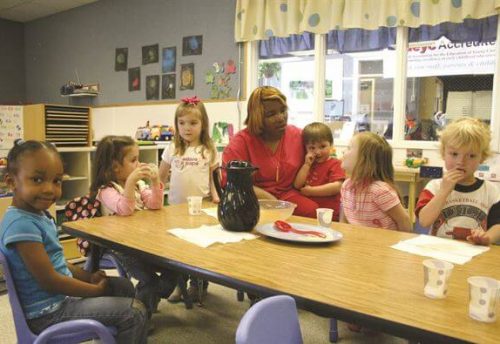
Developing Healthy Eating Habits for Preschoolers is a gradual process that involves consistent routines, nutritious food choices, and a supportive environment at home and school. A supportive preschool environment can complement the healthy routines children develop at home. Parents exploring preschool options can learn more about the Cambridge Montessori preschool and daycare program, where children can experience a nurturing environment that supports their overall development, independence, and everyday learning.

FAQs
Q1: How many new foods should I serve?
Ans: You can serve one new item with each meal.
Q2: Should a preschooler finish everything on his or her plate?
Ans: No. Let children eat according to their hunger and fullness, instead of emphasizing a clean plate.
Q3: Are sweet foods not allowed to be served?
Ans: Serving sweet foods occasionally is fine, but do not make them a part of daily diets.
Q4: How can I encourage my child to try new foods?
Ans: Offer new foods alongside familiar favorites and allow your child to explore them without pressure.
Q5: What should a balanced meal for a preschooler include?
Ans: A balanced meal can include vegetables, fruits, whole grains, protein-rich foods, and suitable dairy or alternatives.
Q6: How often should preschoolers eat during the day?
Ans: Preschoolers generally benefit from regular meals and healthy snacks based on their hunger and daily routine.
Q7: What should I do if my child refuses a healthy food?
Ans: Stay patient and continue offering the food at different times. Children may need repeated exposure before accepting a new food.
Q8: Should parents force children to eat vegetables?
Ans: No. Encourage children to try vegetables, but avoid forcing them to eat, as this can make mealtimes stressful.
Q9: What are healthy snack options for preschoolers?
Ans: Nutritious options can include fresh fruits, vegetables, yogurt, whole-grain foods, or other age-appropriate snacks.
Q10: Why is it important to develop healthy eating habits early?
Ans: Early healthy eating habits can help children become familiar with nutritious foods and develop positive attitudes toward food.
References
Health note: This article provides general educational information and does not replace advice from a pediatrician or another qualified professional.