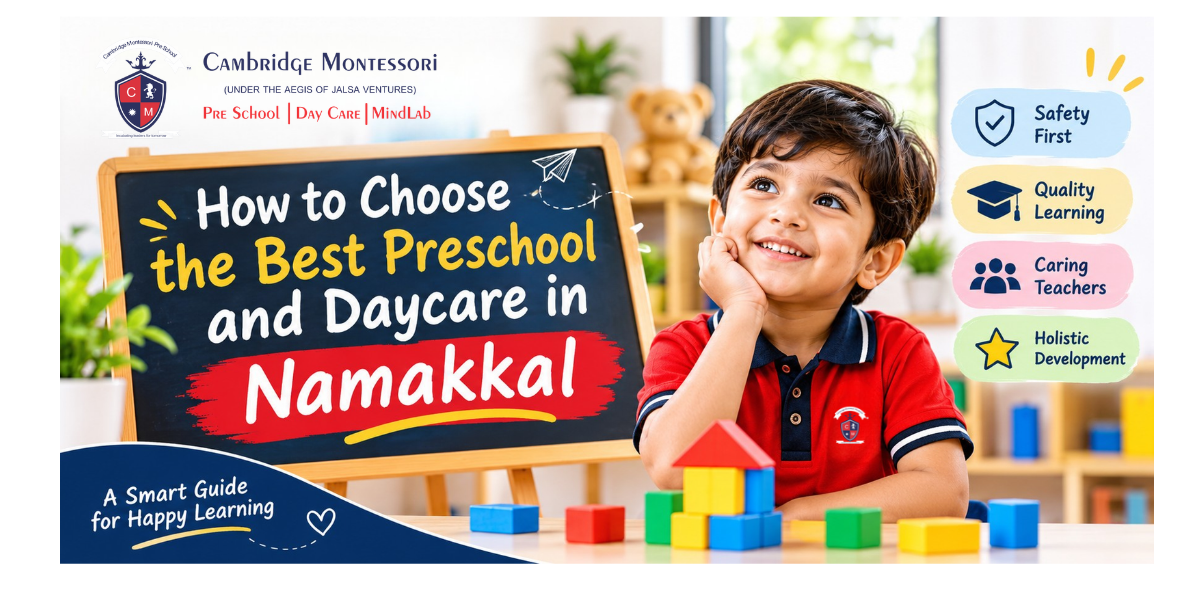
How to Choose the Best Preschool and Daycare in Namakkal
A child’s first school experience is about much more than learning letters, numbers or colours. It is where children begin exploring new surroundings, developing communication skills, building friendships and becoming more independent. For parents searching for the best preschool in Namakkal choosing the right early learning environment means finding a place that supports curiosity, confidence and overall development.
Namakkal is an established residential and commercial destination in Tamil Nadu, with families exploring educational options across areas such as Thillaipuram, K.K. Nagar, R.P. Pudur and Kondichettipatti. As children begin their educational journey parents need to understand the differences between available preschool approaches, classroom environments and childcare facilities.
Whether you are looking for a Montessori preschool, nursery school or daycare, understanding what makes an early learning centre suitable for your child can help you make a more informed decision.
Why Choosing the Right Preschool in Namakkal Matters
The preschool years introduce children to new experiences, social relationships and structured daily routines. A supportive first school experience can help children become comfortable in group settings while developing important skills through everyday activities.
Parents looking for a preschool in Namakkal should consider how an institution supports development beyond basic academic concepts.
During these formative years children benefit from opportunities to:
- Communicate their thoughts and express their feelings.
- Participate in group activities and interact with other children.
- Develop fine and gross motor coordination.
- Explore colours, shapes, numbers and language.
- Practise simple everyday responsibilities.
- Build confidence through age-appropriate experiences.
A good preschool should make learning engaging and meaningful rather than placing unnecessary academic pressure on young children. The focus should remain on helping children discover, explore and develop at their own pace.
Understanding Montessori Education and Early Learning
Montessori education is an approach that encourages children to learn through hands-on experiences, exploration and purposeful activities. Rather than depending entirely on verbal instructions, children interact with specially designed learning materials that help them understand concepts through observation and practice.
A Montessori preschool may introduce activities related to practical life, sensory exploration, early mathematics, language development and creative expression.
Some important elements parents should understand include:
Prepared Learning Environment: An organised classroom with accessible, age-appropriate materials encourages children to explore activities and participate independently.
Individual Learning Pace: Every child develops different abilities at a different speed. Teachers observe their progress and provide guidance according to their learning needs.
Practical Life Activities: Simple tasks involving sorting, arranging, pouring and handling materials help children develop coordination and everyday independence.
Teacher Guidance: Educators introduce activities, observe children’s engagement and provide assistance when required.
Hands-On Learning: Children get opportunities to understand concepts through practical experiences rather than relying only on memorisation.
Parents comparing a Montessori preschool in Namakkal with other early learning options should understand how these principles are implemented in everyday classroom activities.
What Parents Should Check Before Selecting a Nursery School
Choosing a nursery school involves evaluating several practical factors. A school’s appearance or popularity should not be the only reason for selecting it. Parents should understand what their child will experience throughout the day.
Teacher Experience and Interaction
Observe how teachers communicate with children. Patience, attentive listening and respectful guidance are important qualities in early childhood education. Educators should encourage participation while understanding individual differences.
Classroom Safety and Hygiene
Check classroom cleanliness, age-appropriate furniture, washroom facilities, drinking water and supervision arrangements. Parents should also understand emergency procedures, visitor policies and child handover practices.
Learning Activities
Understand whether children participate in storytelling, music, art, movement, practical activities and early language or number concepts. A variety of experiences helps children explore different interests and abilities.
Daily Routine
Ask for a sample timetable. It should provide a suitable balance of learning, play, movement, interaction and rest. Young children need a comfortable routine that does not overwhelm them with too many structured activities.
Parent Communication
Find out how teachers share updates about classroom participation, developmental progress and everyday concerns. Regular communication helps parents remain involved in their child’s learning journey.
These factors help families compare preschools in Namakkal based on the actual quality of the learning experience rather than only the facilities advertised.
Exploring Preschool Options Around Namakkal and Nearby Areas
Parents do not always restrict their school search to the exact residential locality where they live. Families from different parts of Namakkal may also consider nearby educational options depending on their daily travel, work schedules and family arrangements.
For parents searching for a preschool near Namakkal accessibility and daily commuting convenience can be important considerations. Families living around Thillaipuram, K.K. Nagar, R.P. Pudur and Kondichettipatti may compare available options according to their residential location and everyday requirements.
The decision should consider more than geographical distance.
Before shortlisting a preschool, consider:
- Actual travel time during morning drop-off and afternoon pick-up.
- Availability of suitable transportation arrangements, if required.
- Convenience for working parents and family members.
- The child’s comfort with the daily journey.
- Whether school timings fit the family’s routine.
- Accessibility to the school during regular traffic conditions.
Parents should also consider whether a nearby daycare facility is available if they require extended childcare support.
The closest school may not always be the most suitable one. A balanced decision should consider convenience alongside educational quality, teacher support, classroom safety and the child’s comfort.
Supporting Social, Emotional and Cognitive Development
Preschool education should support the development of the whole child. Early learning activities provide opportunities to build different abilities through everyday experiences.
Social Development: Group activities, conversations and shared tasks help children practise cooperation, turn-taking and communication.
Emotional Development: Supportive interactions help children recognise feelings, express themselves and gradually become comfortable in new situations.
Cognitive Development: Puzzles, sorting activities, matching exercises and practical experiences encourage observation, memory and problem-solving.
Physical Development: Drawing, threading, building, dancing and outdoor movement help children practise coordination and body control.
Creative Development: Art, music, storytelling and imaginative activities allow children to express ideas and explore different possibilities.
A well-planned early learning environment provides children with opportunities to develop these skills naturally. Parents should look for a preschool that offers varied experiences instead of focusing only on early academic performance.
Helping Your Child Prepare for the First School Experience
Starting preschool is an important transition for both children and parents. Some children adjust quickly, while others need more time to become familiar with new surroundings, teachers and classmates.
Parents can make this transition easier through small everyday steps:
- Talk positively about school and the activities children may experience.
- Encourage simple self-help habits such as organising toys and belongings.
- Introduce regular sleeping and waking routines.
- Allow children opportunities to interact with other children.
- Read stories and encourage conversations at home.
- Practise simple activities such as eating independently and keeping belongings organised.
- Follow the school’s guidance during the initial adjustment period.
If a child feels unsettled during the first few days, patience and consistent reassurance can help. Parents should maintain open communication with teachers and give children enough time to become familiar with their new routine.
Conclusion
Choosing the right preschool is an important decision that deserves careful consideration. Parents exploring the best preschool in Namakkal should look beyond infrastructure and evaluate the teaching approach, teacher-child interaction, classroom safety and opportunities for overall development.
A meaningful early learning experience should encourage children to explore, communicate, develop independence and enjoy discovering new things. Understanding these factors can help families make a confident decision about their child’s first educational experience.
Frequently Asked Questions ( FAQ’s)
Q1. What is the right age to start preschool in Namakkal?
Ans: Many children begin preschool between 2.5 and 3 years of age, depending on their developmental readiness and the school’s eligibility criteria. Parents should consider their child’s communication, social interaction and comfort with group activities.
Q2. What should parents look for in a Montessori preschool in Namakkal?
Ans: Parents should look for an organised learning environment, trained educators, hands-on materials, practical life activities and opportunities for independent exploration. These elements help children develop confidence and everyday skills.
Q3. Is Montessori education suitable for toddlers and preschoolers?
Ans: Age-appropriate Montessori activities can support exploration, coordination, practical skills and early concept development. The suitability depends on the child’s developmental stage and the quality of the learning programme.
Q4. How can parents compare preschools in different areas of Namakkal?
Ans: Parents can compare preschools based on teaching methods, teacher-child interaction, classroom safety, daily routines, fees and travel convenience. Visiting shortlisted schools can provide a better understanding of their learning environments.
Q5. How does preschool help children become socially confident?
Ans: Group activities, storytelling, shared tasks and classroom conversations give children opportunities to interact, communicate and participate with others. These experiences gradually help them become more comfortable in social settings.
Q6. What should parents ask during a preschool visit?
Ans: Parents should ask about teacher qualifications, class size, daily activities, safety procedures, hygiene practices, parent communication, fee structure and the child’s settling-in process.
Q7. What is the difference between preschool and daycare in Namakkal?
Ans: Preschool primarily focuses on early learning and developmental activities, whereas daycare provides supervised care for children during working hours. Some institutions offer both services to accommodate different family schedules.
Q8. How important is the classroom environment in early childhood education?
Ans: A safe, organised and welcoming classroom encourages children to explore materials, participate in activities and develop confidence. Age-appropriate resources and supportive teachers also contribute to a positive learning experience.
Q9. Should parents choose a preschool close to their home in Namakkal?
Ans: A convenient location can make daily travel easier for children and parents. However, educational quality, teacher support, classroom safety and the child’s comfort should also influence the final decision.
Q10. How can parents understand their child’s progress in preschool?
Ans: Regular discussions with teachers, developmental observations and classroom feedback can help parents understand changes in communication, independence, coordination, problem-solving and social participation.