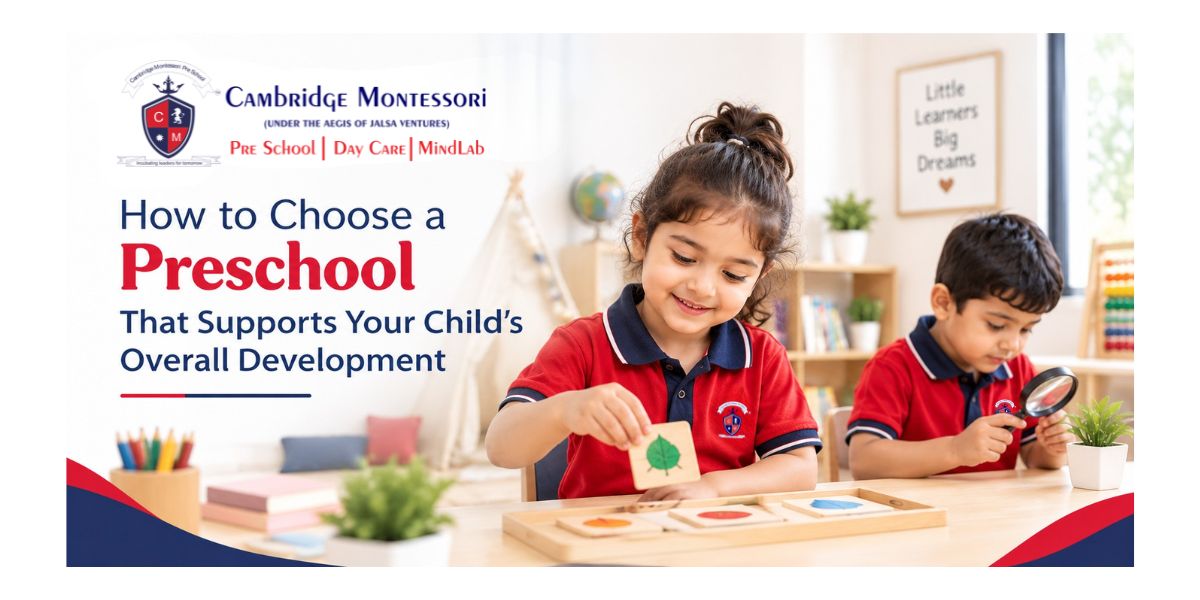
How to Choose a Preschool That Supports Your Childs Overall Development
Choosing a preschool for their child is a crucial decision that parents make. A good preschool should prepare the child for primary school, as well as provide a safe and nurturing environment where children can grow. Parents should select a preschool that understands the differences between children and encourages children through play and social interactions.
1. Select A Child-Centered Learning Environment
A child-centered learning environment places importance upon the child’s interests and learning stages. Instead of relying on worksheets and memorization, preschools should encourage curiosity and active participation from children. Children should be given opportunities to explore play materials, ask questions and experience hands-on experiential learning. They should feel safe and heard, and their individuality and confidence should be nurtured.
2. Examine the Quality of Teaching
Teachers should be well trained in early childhood education and understand the needs of young children. Parents should observe how teachers speak to children – positive teacher-child exchanges help children to develop their language skills, confidence and social skills. Ask about staff-to-child ratios and how the preschool ensures individual attention towards all children.
3. Ensure Social and Emotional Development
Preschool is a learning ground for students to learn how to share, cooperate, communicate and navigate emotions. A good preschool should provide students with opportunities to participate in group activities, storytelling and conversations. Teachers should encourage students to develop empathy and share their feelings. They should be able to resolve their conflicts with other students.
4. Evaluate Physical Development Opportunities
Children should be provided adequate opportunities for developing their physical skills through play and movement. Enquire if the preschool provides opportunities for physical activities such as running, jumping, dancing and simple sports. Fine motor skills should also be developed through activities such as drawing, painting and building blocks.
5. Language and Cognitive Development
A preschool should encourage student’s language development by encouraging them to talk, listen, observe and solve simple problems. They can incorporate activities such as books, storytelling, conversations and age-appropriate experiments to strengthen children’s language and thinking skills.
6. Developing Creativity and Imagination
Creativity should be honed by the preschool, and children should be allowed to express themselves and experiment with ideas. There should be lessons on art, music, dance, drama and craft activities, as they support imagination, problem-solving, self-expression and confidence.
7. Safety, Hygiene and Nutrition Practices
A good preschool should provide a clean and safe environment, with provisions for first aid and health emergencies. Parents should enquire how accidents, illness and allergies are handled. If meals are provided to children, their good quality must be ensured. A safe environment should provide students with the security they require to learn and grow.
8. Understand the Daily Routine
A preschool’s routine should include learning, free play, meals and rest. Parents should enquire a preschool’s daily routine and understand whether it appears to be realistic for young children. Predictable routines are preferred, while students can also benefit flexibility in their routine. Children should not be pressurized excessively, as academics may reduce time for play.
9. Consider Parent-School Communication
10. Visit the Preschool Before Deciding
A personal visit to the preschool can reveal many important qualities about the school environment. Parents should observe how children behave, how teachers interact with students, whether classrooms feel welcoming and whether children appear engaged in their activities. They should also ask about the curriculum, teaching qualifications, safety measures, play opportunities and parent communication. Exploring Our Centres can help parents understand how the learning environment supports children’s overall development and everyday learning experiences.
Conclusion
Parents should choose a preschool that supports their students beyond academic development. A good preschool provides children with the opportunity to play, explore, communicate and become independent. Parents should enquire about the quality of teaching, emotional support, physical activities and learning experiences. Children should feel safe, valued and encouraged at their preschool. Cambridge Montessori Preschool ensures all these prerequisites for a good preschool are met, and does not compromise on teacher quality, safety and academic, social and physical development of children.
Frequently Asked Questions (FAQ’s)
Qus1. Are expensive preschools automatically better?
Ans: No. Teacher quality, safety, curriculum and learning opportunities matter more than fees alone.
Qus2. Should a preschool teach reading and writing?
Ans: Yes, through age-appropriate activities such as storytelling, conversations and playful learning.
Qus3. How many visits should parents make?
Ans: Parents should visit at least once during school hours to observe classroom activities and teacher-child interactions.
Qus4. How does preschool support a child’s overall development?
Ans: Preschool supports cognitive, physical, social, emotional and language development through play and structured activities.
Qus5. What should parents look for in a preschool environment?
Ans: Look for clean, safe, welcoming classrooms with age-appropriate learning materials and play spaces.
Qus6. Why is teacher quality important in preschool?
Ans: Trained teachers support children’s confidence, communication, independence and emotional growth.
Qus7. How important is play in preschool learning?
Ans: Play encourages creativity, problem-solving, social interaction and physical development.
Qus8. Why is parent-teacher communication important?
Ans: Regular communication helps parents understand their child’s progress, strengths and developmental needs.
References
Health note: This article provides general educational information and does not replace advice from a paediatrician or another qualified professional.