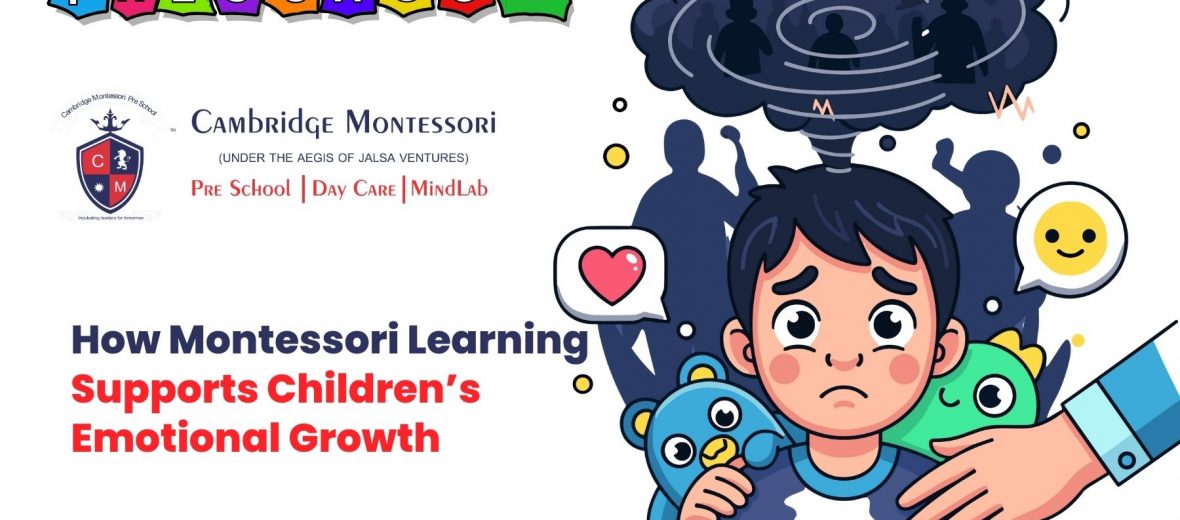
How Montessori Learning Supports Children’s Emotional Growth
Life during the first few years of the child is not about learning letters or numbers; it is about learning to feel safe, confident, and understood. It is a common concern among many parents that their child will cry in drop-off, stick to them, or have difficulties expressing feelings. This is where the Montessori approach silently comes in as a force.
This blog will discuss the ways Montessori can help children find a balance in their feelings, the reasons that make this aspect so important at a young age, and how the Cambridge Montessori Preschool contributes to the proper well-being of children at such a fragile age.
A Calm Environment That Builds Emotional Security
Children are very emotional, particularly when they are in new settings such as preschool. Montessori classrooms are created to reduce overwhelm and create a sense of emotional safety.
At Cambridge Montessori, the classroom itself supports emotional adjustment:
- Calm colors and natural lighting
- Predictable daily routines
- Child-sized furniture that promotes independence
- Quiet, focused workspaces instead of noisy classrooms
Anxiety in children reduces automatically when they are aware of what to expect. This is the reason why most of the parents who are in search of a preschool near me will observe that Montessori children are settled within shorter periods and feel more comfortable.
Why this matters emotionally:
Having a relaxing environment motivates children to be able to manage their emotions rather than act impulsively. As time goes by, they develop the confidence to venture, open up, and interrelate with others.
Respecting Feelings Instead of Correcting Them
In many traditional settings, emotions are often managed quickly—“Don’t cry,” or “You’re okay.” Montessori takes a different, more respectful approach.
At Cambridge Montessori Preschool, teachers:
- Acknowledge emotions without judgment
- Give children language to express feelings
- Allow time for emotional processing
- Guide gently instead of forcing behavior
As an example, when a child is upset or frustrated, they are not pressured or disapproved. Teachers instead make them see the reason as to why they feel that way and how to react.
Emotional outcome:
Emotional intelligence among children is developed early. They get to learn empathy, patience, and self-awareness, which lasts a long time even after they have graduated high school.

Independence That Builds Confidence from Within
Independence is one of the best emotional advantages of Montessori. Children are trusted to do things themselves at their own time.
At Cambridge Montessori, children are encouraged to:
- Choose their own activities
- Complete task independently
- Care for their environment
- Respond to small problems individually.
This self-confidence is created by this feeling of I can do it. This makes the children feel self-dependent, regardless of whether the parents are seeking a nurturing daycare or the best preschool.
Why parents notice the difference:
Children who feel capable experience fewer emotional outbursts. They trust themselves, and that trust becomes emotional stability.
Conclusion:
Children cannot develop emotional adjustment at all at a magic; the adjustment must be worked at. Montessori achieves this through the provision of serene environments, gentle instructions, and self-reliance that gives self-confidence. In Cambridge Montessori Preschool, emotional well-being is considered the key to all learning. Montessori can have a significant impact on your child if you want them to feel safe, comprehended, and emotionally resilient.